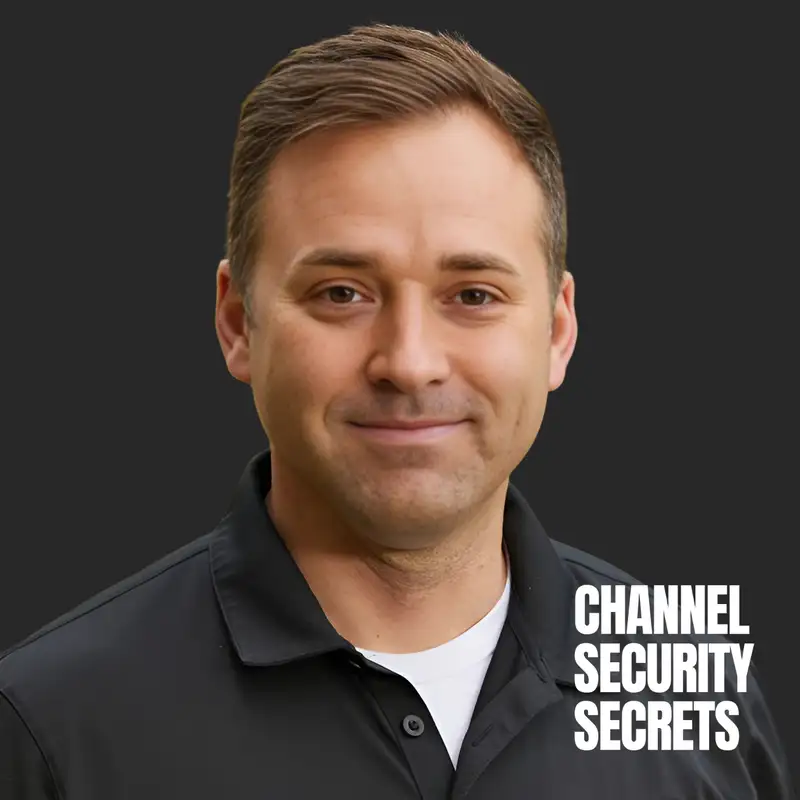
Driving Client-Centric Cyber Solutions - Matt Kopp - Channel Security Secrets - Episode #10
Welcome to Channel Security Secrets. I'm Lou Raban. On this show, we expose the untold secrets and critical insights from the people shaping the future of cybersecurity sales in the trusted adviser channel. If you're looking to up your game around selling security, stick around. Channel Security Secrets is brought to you by Cyber Defense Group on a mission to shift cybersecurity from reactive to resilient.
Speaker 2:I'm thrilled to chat with our guest today. He's an IT leader and elite technical resource trusted by top enterprises for over a decade. He's held leading tech positions at companies like MTM Solutions and Alliant Technologies. He brings hands on experience delivering IT and business solutions for organizations ranging from SMBs to large enterprises. He works closely with partners, vendors, and clients at every level of the organization.
Speaker 2:He's now the director of client technology solutions at Convergent. Matt Kopp, welcome to the show.
Speaker 3:Lou, thank you for having me. Looking forward to being here.
Speaker 2:Yeah. Let's let's just get right into it. What is the biggest secret to your success, Matt, in the channel?
Speaker 3:I would say focusing on the client, the business outcomes, and becoming an extension of their team. We we really wanna be the group that our customers think of when the business brings them an initiative or they have an idea or run into a problem. We wanna be the team that they call and bring in as that trusted advisor. So we recognize that every organization's at a different point with their technology. They're at different stages in building out a cybersecurity program if they're really focused on that at all.
Speaker 3:And they have different goals as a business. So the better we understand all three of those things, it's really how we add value for our clients. We've here at Convergent, I've been here about eight years now, think. We've been in business coming up in February will be fifty years. So we've really transitioned from being originally a carrier, a PBX vendor to a traditional VAR, you know, selling unified communications network and data center infrastructure.
Speaker 3:Now really focused on being a full service technology advisory firm. So, you know, to do that and what's kind of made us successful in the channel here, just to go back to your question there is we spent a lot of time focused on understanding our current customers business and technology needs and digging into the data that we have about our customers from how we've worked with them in the We've we've built strategic relationship with our customers and and focus more on those outcomes that I mentioned earlier and less on transactional business to really build long term strategic relationships with those customers because we we really believe it's important to meet customers where they are currently, and that's from a technology perspective or even in a cybersecurity perspective, understand where they are in the kind of journey, what they're trying to get to, so we can help them build that road map.
Speaker 2:Yeah. We we hear that a lot, and that's great that that's what you're concentrating on and convergent... Is concentrating on, which is not being transactional, understanding deeply what the customer needs are and aligned with their business and their business outcomes, which is something that, you know, we do also at Cyber Defense Group, which is why we like partnering with Convergent because you guys understand that as well, and that's the way you look at the world. And, you know, being a part of their team as well, I think that that is something we... We've...
Speaker 2:Again, we're doing the same thing, so that's why we work well with you. But I think it's really important for a lot of the trusted advisers out there that are listening to this. It's not just about, hey, let's sling a couple, whatever circuits and then move on, especially when you speak about cyber. So you mentioned cybersecurity a bunch as well. You know, what what are some of the things that you're seeing with cyber right now, and and is cyber something that you've been selling for a while?
Speaker 3:Cyber has been something that, as an organization, we've been selling for a little while. I have been personally as well. I think I I started selling MDR services with eSentire in 2013, 2014. So it... It's...
Speaker 3:I have a relatively long history of that. And we've been doing it as an organization since I've been here, as well as as we grew our relationship with with you guys and through the Avon portfolio for the last three to... Or four to five years, really have focused on cyber because it's a it is a differentiator for us and it allows us to put our customers in a in a much better place than they are currently. A lot of people think that they're secure because they have firewalls, know, some endpoint detection, but when we really start digging into it, we we find the gaps in the environment and that's when we we bring in professionals like yourselves that are... Who are the subject matter experts to really dig into that and and find solutions for them.
Speaker 2:That's great. So like the people and process part, it's not just about the... Yeah. The the the technology solution.
Speaker 3:Yeah. We've we've tried to transition away from the technology solution focus as as we migrated away from being, you know, bar focused, let's say. And, really, that's still there. It's always gonna be there. The technology ultimately is involved in all of this, but we do need to make sure that they, you know, have...
Speaker 3:The people have processes in place. They go through the exercises that need to be done, and they have the resources to lean on from a security perspective.
Speaker 2:Yeah. Big time. So what's that evolution been? You said... That's that's impressive because 2013, 2014, those are early days of cyber.
Speaker 2:I mean, I've been doing a little bit longer than that, but it's, back back in the day, but in the arts, was kind of like you could go back to paper even. There there were... That was kind of some of the customer conversations. They're like, listen. We're we're not Fort Knox.
Speaker 2:I can't tell you how many times I've I heard that in in my career. We don't need to do that, because they really could fall back to paper. 2013, 2014, that's when things started to change just a bit. Not a huge amount, but people were starting to see more advanced attacks. Know, breaches started to become really, you know, more there was a lot more news around them.
Speaker 2:And so so there you started with MDR. What was your kind of evolution from doing, you know, just selling MDR to understanding, wait, there's there's a lot more to this this puzzle?
Speaker 3:I I think it's partly been our relationship with with Avant that's really grown that. I mean, we we were selling point products around the MDR, but not what I would consider now of security program and and really helping the customers have understand from beginning to end where they're at and more, you know, selling point products that we're gonna solve a specific need. Just as an example that, what we had one customer a couple of years ago that we reached out to us, through Cisco and said, hey, we wanna buy Cisco Umbrella. And that's great. Good product and everything.
Speaker 3:Well, when we got on the phone and asked why and started having those conversations, they said, we're we're starting to plan for CMMC certification. We we wanna be able to, you know, service the government. That's gonna be a large part of our business. And when we... Then we started going down the CISO route and MSSP services and patching programs.
Speaker 3:So just the one question for us of why has changed, you know, a lot of opportunities from a point product like we had mentioned to a full service platform for the customer.
Speaker 2:Yeah. And asking why, that's again a recurring theme. We often get inbound, okay, well, they want a pen test and it's like, wait. Why? What are they trying to accomplish?
Speaker 2:And then, yeah, you need to basically dig and understand more about their business, more about their goals, and then start to align whatever you're going to recommend with with those goals and outcomes.
Speaker 3:Yep. No. Definitely. And then going back to the the paper conversation earlier, we had a... I had a...
Speaker 3:I sat in on an incident response with a customer, tabletop, exercise with, about, I don't know, six weeks ago. And one of the things that... And then one of the executives outside of IT had said was, could we go back to paper? I know we've had that in place. And the IT people were basically like, well, yeah, we have, but nobody here has ever done it.
Speaker 3:The generation of employees here have only worked in this system. They have never done it. So it... It's not as simple as it used to be where you just switched over to a a new a new platform, whether that's an EMR or or something like that, and then be able to just fail back right away. A whole different world now where nobody knows that environment anymore.
Speaker 2:Oh, yeah. Yeah. That's so true. Between things moving away from on prem, you don't have control of that. I mean, some of the advantages are you can sometimes get up and running quicker because you're not keeping anything locally.
Speaker 2:So if anything locally is connected, you're... You know, you you don't have to worry about it because you go to the cloud. But on the flip side, yeah, how do you spin up an entire new cloud instance under under a new domain name, perhaps, and then all the infrastructure associated with that and stuff? You can do it. It's it's actually...
Speaker 2:You know, we've done it. It's it's doable, but you you don't want the first time you're doing that to be when you're in the middle of an incident. You you definitely want that to be something you've practiced, rehearsed, documented, things like that. So that's great that your customers are actually doing tabletops. Are you seeing a lot more demand for that?
Speaker 3:It's something that we've seen more... It's been coming up more, and we've been recommending it more. And and I think it's part of our... As we've grown and and educated ourselves in the security space, and and we don't... And and I certainly don't consider myself a security practitioner, but we wanna make sure that what we're we're keeping up to date.
Speaker 3:Okay. What's the best practices on doing this? Let's look at what... Do you have an incident response plan? Have you done a table at the top exercise before you go and do a penetration test?
Speaker 3:Because, you know, you did one last year and you probably haven't gone back and fixed everything that was found in that report. So let's let's really get an understanding of the environment and the needs and, you know, fill those gaps before you you come back... Before you do that penetration test.
Speaker 2:Oh, yeah. Big time. And and that's... I feel like the pen tests are kind of a false sense of security because they're like, okay. Well, no one could...
Speaker 2:The the the people that we hired couldn't break in, and there's so many variables behind that. It's like, how much did you pay for that pen test? Because if it was under 50 k, I can guarantee you they ran a vulnerability scanner and probably, you know, did some manual testing, but they didn't do what a... And, you know, a persistent or, motivated attacker will do, which is patiently probe every single thing and and really, really run vulnerabilities, etcetera, against it. What was the detective capability?
Speaker 2:You know, things like that. So, yeah, it's... I think IR plans or IR tabletops, incident response tabletops are the modern equivalent of I have a firewall kind of thing.
Speaker 3:Yeah. We we, unfortunately, we don't hear that as much anymore of, hey. I have a firewall and antivirus on our on our endpoint. Yeah. We're good.
Speaker 3:I'm okay. But but... Yeah. Every once in a while, you still hear things that surprise you.
Speaker 2:Yeah. Yeah. And what about the, like other vectors? Are you seeing any change in the MSP environment with like IT providers? Because that that's been a pain point for us where we try to educate customers when they we come in and they're like, well, IT firm X can do it for, you know, a lot cheaper.
Speaker 2:And it's like, yeah, but, you know, it's not the same thing. Do do you... How how do you feel about that? Is that something you're seeing?
Speaker 3:It is something that we see, especially on the in the lower end of the market where you have smaller, maybe local or regional MSPs that say we do cybersecurity too, and it's a, you know, checkbox in the in the menu. Mhmm. But it's not the same as having somebody that your entire organization is focused on cybersecurity like like CDG is. That's where there's really a differentiation there, and you're gonna get a lot more value for the money that you're spending versus those local MSPs. They're just, you know, they're using a third party to monitor, and they're not doing any...
Speaker 3:Doing any of that stuff themselves. They... No no organization those sizes can really staff what's needed to, you know, twenty four hours, let alone get the right people to begin with and the experience to begin with. We do see as we move up the stack in the larger MSPs, the MSSPs that are, you know, national or even international that they have the the staff and the ability to do it. But I also think it is important to, you know, have a partner to work with that can be, you know, separate from your MSP.
Speaker 3:It is something to consider because if if someone's in charge of the infrastructure and the security, there is a little bit of a conflict there. So we we generally try and look at it as if you're gonna go for a... An MSP, let's find the best one for you. And then also develop a security plan, around that using a partner, like CDG.
Speaker 2:Yeah. I... That's that's great, and it's it's a smart strategy because there's two things on that. One is, you know, IT's job is to keep the lights on, and often that's where problems come in because IT will say, okay, the CEO just called me. Gotta open this port or, you know, give him an exception or her an exception for the whatever security controls that are in place.
Speaker 2:Let's do it because we gotta... Or whatever. There's a developer. It's midnight. They're in, you know, overseas somewhere, and we just need to let them get in to do their work.
Speaker 2:But the problem is that's not obviously very secure. And, but cyber can't do their job if IT without IT. So there's gotta be a partnership there, but there's also gotta... There there needs to be oversight on the cyber side of of the IT department. And it's not to say that IT should report to cyber.
Speaker 2:It's just to say that when IT is doing things, they need to have, you know, kind of a... It's... It needs to be informed. You know? If you're looking at the rasty, it's the eye.
Speaker 2:Cyber needs to be informed and sometime... Or or, you know, consulted often as well. So, yeah, I think that IT, there's always gonna be a little friction I've seen in, you know, a ton of environments, but ultimately that's something that we're doing now is we're looking at an IT capabilities assessment to determine, you know, are they really basic stuff? Are they following like ITIL? Are they are they doing tickets?
Speaker 2:Are they, you know, ticketing all the changes that they have? Do... Are they doing like firewall rule reviews and stuff like that? That really is a an IT, you know, issue, firewall rules. However, cyber has to have some oversight of that.
Speaker 2:So, yeah, it's it's good that you've got that. You're recommending that that's separate because I I can't agree, you know, enough.
Speaker 3:Yeah. I mean, there should be... I mean, obviously, the two working together, but there should be a level of tension and pushback there because, you know, they they have different roles and requirements, and they're being asked to do different things. So I think that is... I think that's natural that that that is gonna happen.
Speaker 3:And where we see a lot of the... This... The mid market or even smaller or larger small business, say 200 to a thousand employees, they really... A lot of them don't have the... They don't have the technical security staff to be able to to do this themselves.
Speaker 3:And most of them, unless you get to that high end, will never... They don't... They can't justify it from a cost perspective, which is where we fit in to be able to help fill those gaps with our with with our partners.
Speaker 2:Yeah. I mean, we... That's that's a sweet spot for us, obviously, because, you know, our value prop is for one f t... The the cost of one FTE, you're getting a team. And that's a mistake I think a lot of those mid market companies make is, know, okay, we're going to spend one FTE or two FTEs worth of security.
Speaker 2:They hire the full time employees and then they realize that's not actually they need more than that. It's not because it's so complex necessarily their environment. It's just that, you know, there's so much to cover in. And when you start to when you open that Pandora's box of security, you know, there's so much that... To cover that you you realize, wait a second.
Speaker 2:This is bigger than, than than we imagined. And we see a lot of mid market companies fall down because they do... They hire that one person, and they expect them to do everything, or they give the title to someone in IT. Like, you're the director of IT. We're gonna make you the director of security and IT.
Speaker 2:And it's like they're usually already overbooked with their IT responsibilities, and now they're like, okay. Let's throw some security on top of that. It's not like a frosting. Right? Like, it's like its own, like, kitchen.
Speaker 3:It's it's multiple full time jobs.
Speaker 2:Yeah. Exactly.
Speaker 3:Yeah. Yeah. We... I I met with a client last week for lunch, and and they're like, we're we're being told we should... I forget who it was that said it, but they should they should put a SIM in place.
Speaker 3:And I'm like, well, if you want one, that's great. You can get one. But there's two of you for 250 employees. You're gonna look at it for the first forty eight hours, and then you're never gonna look at it again. Unless unless you're putting in a a program and somebody to actually monitor and respond to these things, there's there's not much of a point there for you to spend the money on that.
Speaker 3:You're not gonna get any value out of it, until there's a problem, and at least you can go back and, you know, get some data to figure out what happened. But you'd want... We we wanna avoid that to begin with.
Speaker 2:Big time. And, yeah, the... I mean, trying to self serve on some of the stuff that you can outsource, like, Yeah. I'm sorry. MDR, absolutely.
Speaker 2:There's some great vendors out there that have the SIM and the endpoint. That's commoditized now. You absolutely need to do that. There's no reason to try to do that yourself internally. Not only are you not going to save money, but especially if you rely on the vendor out of the box configuration, that's a recipe for disaster.
Speaker 2:So, yeah, outsource that to an MDR, a good XDR vendor.
Speaker 3:Yeah. I think it just gives you a false sense of security when you're when you're doing that, really.
Speaker 2:Yeah. And it's not their fault. If you think about it, it's it's a lot of the industry's fault, which has this kind of tick box mentality like, Okay, check, check, check. You know, do you have the especially cyber insurance, which is now getting more complicated... Well, not complicated, but yes, more in-depth as to what the controls are because, yeah, it's not just like, yeah, do you have a firewall?
Speaker 2:Do you have antivirus endpoint protection? Do you have an MDR vendor? Okay. Tick, tick, tick. Do you have a SIM?
Speaker 2:Now it's like, well, what are your policies and procedures around security? You know, what does your program look like? How are you, continuously, reviewing the threats against your environment and understanding how they're evolving? Those things, you can't tick those boxes. That's not like a...
Speaker 2:Have that. And the problem is though the vendors would have you believe that. Right?
Speaker 3:Yeah. Yeah. You could say, input our product in, and then you could say you've you've covered it with VEX, and that's just not that... It's just not the case anymore. And and it it it's changing the business side's, understanding of what's required for for cybersecurity.
Speaker 3:Before, if you were just getting that checkbox of, hey. Do do we have these 15 things or whatever it was? And they could say yes. They were... That's all they cared about.
Speaker 3:But once you have to start having those deeper conversations and it turns into almost an essay response versus a a checkbox, it opens up a lot a lot of people's eyes. And and for for us, that's great because it gives us the opportunity to go in and have those conversations with not just the the IT team or the security people, but with the business side of the organization.
Speaker 2:Yeah. And third party assessments too. If they start doing business with Fortune 500 customers, there's no way they're gonna pass those checks just by tick box or even saying, hey. Got SOC two. Got, you know, some kind of PCI or whatever.
Speaker 2:They they... They're gonna be asked, hey. So show us. Let's let's talk to your... Who is your security lead?
Speaker 2:Let's have a have a phone call. And especially if that's like an IT person that, you know, or or an MSP that's never really been in those rooms to have those conversations with these... Yeah. Not gonna go well, and we've seen it. Yeah.
Speaker 2:It's it's really interesting with the the the third party stuff too. That's how a lot of the companies are are getting hacked now is through third party vendors. So so the Fortune five hundred is absolutely saying, wait a second. We're not just taking this. I...
Speaker 2:You know, I... As a tangent, the whole van... I don't know if you know Vanta, which is a platform to get SOC two and stuff.
Speaker 3:Yeah. I know the... Yeah.
Speaker 2:You know, I I love what their original idea was, but I'm kind of on a soapbox against the Vantas of the world and the trust centers because, you look at this big hack, the SalesLoft hack, SalesLoft Drift. What happened there was, you know, all these big companies like Palo Alto Networks. I mean, they're the biggest security company out there right now. They they did... I don't know what they did for third party, you know, risk.
Speaker 2:I'm sure they... Whatever they did, you know, you look at the trust center at SalesLoft, and it shows, hey. They've got SOC two, ISO, like every compliance there you can imagine. That didn't prevent them from getting hacked. And it's because these companies now are saying, you want SOC two in a box?
Speaker 2:Sign up for our program. We'll we'll, you know, scan your AWS environment. We'll tell you a couple of things that have vulnerabilities. Once you close them, you get a green check, and then we've got these auditors that are popping up like mushrooms, and they're like, Hey, we can give you an audit and a SOC two. That's not doing anything to move the industry forward.
Speaker 2:That's actually moving us backward.
Speaker 3:Yeah. I mean, it's almost... It... It's it's almost like what we were talking about earlier with the penetration testing that you're you're kind of you're kind of falling back into that same false sense of security that, oh, okay. They they they have they have that checkbox, so we can we can use that.
Speaker 3:And I'm not... I mean, at some point, there has to be some level. I'm gonna gonna use the word trust, but because you have to have business partners, you have to have these relationships and use the tools and applications that are out there. But it is... It it can let...
Speaker 3:Make people think that just because they have, you know, this this one thing on their website that it... That everything's secure. Now people might just use that as a... To cover themselves as well. Then, hey.
Speaker 3:We checked all these things that we could, and it's the best that we could do because there's always so far you can go.
Speaker 2:Yeah. Yeah. I mean, you're not going to spend, you know, a million dollars to protect a $100,000 piece of, you know, whatever piece of data or something. So it it it doesn't mean that you have to go overboard, and it's true. A lot of these companies are startups.
Speaker 2:They're they've got good, you know, kind of a good product, but they don't necessarily have the funding to do a full crazy, you know, Department of Defense level, you know, security, but you don't need that. I think that's the the misconception that a lot of, you know, business owners and and c suite executives have is... We we shouldn't have to have... We we can get by with spending point 0001% of our budget on security, or they tie the security budget to the IT budget. So the IT budget may be, I don't know, 1%, 10% of their revenue, but then they give...
Speaker 2:It's less than 1% of the IT budget that they allocate towards security. Those are those are bad metrics. Are you are you seeing anything good out there?
Speaker 3:I mean, we see, a lot of customers still looking at it that way, that security is, you know, still part of the IT, especially in that mid mid market. That there's not a separate separate budget for that. We do have some some customers that have started budgeting for those things and and, you know, signed up for for services. Like, we have some customers with you guys that really, for one reason and the other, got... Had a reason that they wanted to go down that route.
Speaker 3:And it opened their eyes to where they could have been previously for a lot less money. Unfortunately, sometimes that's the... You know, something bad happens if that's what it takes, and it's what we're we're all trying to avoid and what they're... What we're preaching out there to customers, but not everybody hears it until they... You know, it's right in front of their face.
Speaker 2:Exactly. Yeah. And it's just a misconception too. I mean, there's some, you know, industries that are really well kind of protected because they're regulated. They there's there's a very obvious loss.
Speaker 2:Finance and healthcare are the two that are really obvious. Then there's other industries like manufacturing, etcetera, that are just starting to get into understanding the impact of not having a cyber program. And, you know, with all of the evolving threats and now AI accelerating everything, it's, you know, both good and bad. It's it's really leading to an environment where you you you know, no matter who you are, if you're connect... If you rely on the Internet and being connected to any kind of digital infrastructure to conduct your business or even software programs that are connected to, you know, like SaaS, etcetera, you're going to...
Speaker 2:You're affected. You need to have a plan. So, yeah, every every company is a tech company these days, essentially.
Speaker 3:Essentially. Or or at least they need to have... Keep that at the top of their, list to to to maintain. Yeah. You are a you are a manufacturer, but you really need to understand the technology that's in place or bring somebody in that does and that can take care of that for you.
Speaker 2:Yeah. And that's what's good about you as a trusted adviser and having the trusted adviser community because, you know, we've spoken about how the vendor... Vendors can absolutely just muck up the whole conversation because of sales and marketing, which we all gotta make a living. Right? But sometimes that marketing is like the silver bullet thing, in security.
Speaker 2:You can help, you know, like, unwind all of that and then help them find the good vendors. So I think that that's that's really important, and that's why you... You're serving a purpose there.
Speaker 3:Well, I I think that goes back to identifying, you know, the goals and and outcomes in the beginning. Because if you don't know what you're really trying to accomplish, whether it's security, whether, you know, UCaaS, you know, CCaaS, whatever it happens to be, If you don't know what you're trying to get to as an endpoint, you're gonna you're gonna see, okay, this vendor says they can do this. That sounds great. And it's gonna solve our problems. But if if that wasn't on your list to begin with and it's not solving everything else, then it's probably not the right solution for you.
Speaker 3:And I think that's where we try and help identify that in the beginning of the process of... In the first, you know, we have a... I think it's about a 12 step process that we go through as we're evaluating solutions for customers, whether that's security or or unified communications, whatever, whatever happens to be cloud services. And we go through that and evaluate those requirements, I think in step two or maybe three. We really wanna get that upfront before we get any conversations with with any providers, any vendors, because if you can't identify that, if I can't come to you and say, here's exactly what they're looking to accomplish, it's probably not going to go anywhere because you're not going to know what to bring to them if...
Speaker 3:When we have those conversations, and they're not going know what to ask for from you. So we really need to be as that trusted adviser, help them define those goals where maybe it's a business perspective, their business outcome that they're trying to accomplish, but we need to help map that over on the technical side to be able to have those conversations as
Speaker 2:Big time. So, Matt, what would you say to a trusted adviser? You you've been selling security for, you know, twelve plus years. What about the trusted advisers that haven't sold security before that wanna start selling in this channel? What what kind of advice would you have for them?
Speaker 3:I mean, I think it's it's similar to... Because I've listened to your other episodes. I've I've... Fan of the show. Thank you.
Speaker 3:But it's similar to what some of the other guys have said. And Like I know Stefan had mentioned, you know, start with DDoS if you're selling circuits. I mean, would... I I obviously agree with that. But also, if if you've been selling, you know, circuits, you've been selling MPLS traditionally, and then you go into SD WAN, look at SASE solutions.
Speaker 3:It's basically the next generation of SD WAN with security layered on top of it. And you're gonna cover a whole bunch of different areas. Like, a lot of... When we're working through these security conversations with customers to originally kinda lay things out and map it out, We use the the cyber defense matrix to to do that. And because visually, it it works great for both the IT team that we're talking to as well as we we show that to the business side because you could easily see gaps in the environment.
Speaker 3:So the way I look at it is if you're selling, you know, MPLS, SD WAN, carrier circuits, look at SASE solutions. It's an it's an easy transition because you're gonna fill a lot of those gaps in with a lot of what comes with SASE solutions. So you have to find the right providers and the right partners and and really lay it out as a part of the overall framework, but it's not a huge jump, to make. Or if you're selling a lot of UCaaS, talk about how they're securing the endpoints. You know, they...
Speaker 3:Those... The the software is going on every PC. It's going on their mobile devices. How are you securing the mobile devices? Are you...
Speaker 3:How do you have two factor set up or multifactor? I mean, there's there's so many different ways that it can go that it just really... It... It's asking one or two more questions when you're having that conversation about whatever it is that you've traditionally sold to your customers. And and I would start there.
Speaker 3:Start with your existing customer base that you already have relationships with, you had already trust you. And just say, hey, we had this conversation about... Or we deployed UCaaS for you. Let's let's take a look at what you're... How you're securing those endpoints because there is data that gets downloaded to those endpoints and then...
Speaker 3:In the UCaaS client apps. So we wanna make sure that we're... You're covering those, and I think that's an easy transition for for trusted advisers.
Speaker 2:Yeah. That's great advice. And, yes, Stefan's the man. He he has really good ways of, overcoming some of that for for, you know, the TAs that are just getting into it. And I think that's what the TSDs are doing now too is they're obviously providing the platform, like, you know, with training Stefan and Rick at Avant.
Speaker 2:And, you know, there's a number of others. I... We spoke to Melanie at Bridgepoint recently. She's great. So they they are kind of dedicating people, the TSDs, to handle security even though now Stevan's moved on obviously to, I think, AI and cloud is what he's working on.
Speaker 2:But, you got Rick who's really well capable of of covering there, Old Redmont. He's he's the man too. Yeah. Love Rick. And so in that, they can provide the the TAs with some kind of information that, hey.
Speaker 2:If you start to get into it, they... They've always said, just pull in the vendor. Like, you know, we'll jump on a call anytime. Most vendors, you know, and there's a ton of MDR vendors. Like you said, you know, you mentioned the East End Tire.
Speaker 2:There's AgileBler. There's a... You know you know the the the players in there. They will... They'd be happy to jump on a call.
Speaker 2:And even if it, hopefully, what they'll do is is put it out there that even if it's not something they do, they will say, hey. There's other... This is what you should look at if you're looking to build a security program or something like that. So.
Speaker 3:Yeah. I agree. The the resources are there, and you you don't have to be the expert for it. You just need to ask a a couple more questions around what you already know to then bring in the experts for it, and you're gonna learn as you go.
Speaker 2:That's right. And we're doing enablement to to for those TAs. I think that's important is to, you know, explain to them before they have conversations with customers what what do you, you know, what what do you for when you bring us in, all that fun stuff. But but you believe secure... I mean, obviously, is not going anywhere.
Speaker 2:It's a good way. The the other thing that we have a challenge with sometimes is is, you know, there's circuits, data centers. It's a much easier sell. It's harder to sell sometimes more complex solution for security. The sales cycles are longer, but it's stickier.
Speaker 2:You gain trust. We're going keep using that word. The trust that you gain with your customer and then the other opportunities that pop out of it that could be unrelated to security, but because you've done a good job by introducing a great vendor like us, you know, shameless plug, then then it would be, you know, a a relationship that makes... Actually bears more fruit because you've done that that introduction. Is that...
Speaker 2:How do you navigate that as well? Like, you've got two deals. One is you're gonna get a great commission. It's... The numbers are much bigger.
Speaker 2:It's a three to five year deal, and it'll close in thirty days versus, you know, smaller numbers. Maybe maybe it's gonna take six months to close, etcetera. Like, you know, what do you say to TAs that are weighing that decision?
Speaker 3:I mean, ultimately, way we look at it and and we're... I was just having a similar conversation with with John Frank Vino, our director of sales, and we're going through this. And it it really is... If we're doing the right thing for our customers of whether that's security cloud, we're gonna end up successful. They're gonna call us back.
Speaker 3:If we build that relationship, we'll we'll end up getting all the business that we need. It's not a matter of who's gonna pay commission higher or lower or whatever. Ultimately, it's all close enough. It doesn't really matter. So we we look at it as, you know, if if we have that security project and a cloud project, what's what's the priority for the business?
Speaker 3:If if this makes the same organization, what's the priority for the business? If you're gonna go cloud and it's gonna take six months to make that migration, At the same time, we're gonna have the security, know, of build out that roadmap and that program and which is gonna include those cloud services. You're gonna need that time anyway to, you know, transition everything and and then still go through the full process of the sales process from the security side. So I think it's really going back to kind of understanding the customer and what their outcomes are, their requirements are that they're looking to to get to, and then... And focusing on that.
Speaker 3:And you're gonna you're gonna be successful in the long term.
Speaker 2:Yeah. Great advice. So so what's exciting you about the future? I... I'm sure it might have something to do with AI, but when when...
Speaker 2:You've been doing this for a while. When you... When you're looking at the landscape, what are you what are you seeing out there that that really kinda gets you excited?
Speaker 3:I think the AI is is everywhere. It's in it's in everything anymore, so you can't you you can't go you can't go a day without talking about it. I mean, I I think there was about two, three week... Right before we we saw each other last in in Texas, we had, I think, like six meetings in a week for for AI and looking at LLMs for customers and all all different customers. They...
Speaker 3:We made one phone call and they all they all took the meeting. So it was a... It... It's a it's a great fit. Right now, everybody wants to learn about it.
Speaker 3:Everybody has an initiative or thinks they're going to have an initiative around it. But the... You can't leave security out of that either. So I... That's what...
Speaker 3:That's why I love the security conversation with customers because no matter what they're doing, it's it's gotta be wrapped in security. Like, if we're looking at the data governance or, even some of the partners that we have, like Akamai with their AI firewall and and there's just some new things coming out, that have been very interesting and and that we can go to our customers and bring to as we're having those conversations around, hey, we want our own LLM, we know our people are going to chat GPT and throwing things in there that they shouldn't be. We got to stop this. So we want to make sure that we're having those conversations because that's what the business is gonna be demanding as is that those AI conversations, but explaining to them that, yeah, you you still need to focus on security. How do you, like, how do you really segment this data?
Speaker 3:How do you classify it all and understand that for, so you're you're not releasing, you know, the the crown jewels of the company out into the into the Internet or for anybody in the company to search?
Speaker 2:Yeah. AI governance is data governance, and that's where... It's really funny when you start layering on these next gen, piece of technology. It still comes back to the basics. So Yeah.
Speaker 2:Really interesting.
Speaker 3:I mean, it it always does, and it's always, you know, similar... It it tends to be similar transitions over time of, you know, it's... It... AI is new and people don't understand it. And...
Speaker 3:But that's how a lot... Where security was before and still is for... Because there's so much to it. But every technology phase goes through that, and as people understand it more, that'll that'll change over time.
Speaker 2:Big time. Big time. So what's a personal story if you have one that demonstrates where cybersecurity might have had kind of a a direct impact on you or or people you know?
Speaker 3:So I think, you know, probably everybody that that on here has... Or that listens to this is gonna know somebody that's been... You know, their credit card's been stolen and their bank account's been stolen. I mean, you and I have been working in, you know, call it IT for for long enough that... And whenever something happens, someone's gonna call you and say, how do I
Speaker 2:Yep. Fix things.
Speaker 3:Yep. What did Yeah. I clicked on this, that type of thing. So we... I think we've all been there if you're if you're in this industry.
Speaker 3:I I think personally, what what drives me on a lot of these things is there's customers that I've worked with for ten, fifteen, almost twenty years on some of them, some that I've known thirty years almost at this point. And I'm not even that old at this
Speaker 2:point. Right.
Speaker 3:But it feels like I am now. But there's there's a lot that you wanna make sure that if they're coming to you from a personal perspective, I wanna make sure that we're giving them the best solutions to make sure that we're putting them in a place to succeed and as well as their organizations. Because I don't want somebody coming to me or going a different direction because, you know, a price or whatever it is and just and then end up, you know, losing their job because they got hit by a breach and it was, and there could have been a way to solve that ahead of time. So I kind of take that personally when we're having those conversations because we wanna be that trusted adviser, and we have to make sure that, you know, if something does ever happen, that we're there standing with you and and working through the process with you.
Speaker 2:Yeah. So, I mean, yeah, you've seen it. If you take it personally, you've seen a number of that. Yeah. Totally.
Speaker 2:And and people... Yeah. We've... There's the elder scams. There's, you know, the AID makes now, which I I think it's gonna get worse.
Speaker 2:I mean, I know it's gonna get worse. So, yeah, it's pretty crazy.
Speaker 3:And it's gonna get worse a lot faster than what we're used to previously.
Speaker 2:Oh, yeah. Oh, yeah. I'm I'm looking forward to the... You know, there's a generational gap thing here too because a lot of people that are getting taken advantage of are ones that might not have had been digital natives. So it's interesting because I I don't know.
Speaker 2:Do you have kids?
Speaker 3:I have three kids. Oh, okay. And they're definitely digital native at this point. Look at that. And they're young.
Speaker 3:So... Yeah.
Speaker 2:Yeah. I've got kids too, and I kinda feel like they're not... I... I'd like to think at least maybe even if it's because I'm their dad, and I've kinda been, like, cyber focused for their lives that are not gonna easily get scammed. And I've seen it already.
Speaker 2:Like, luckily, they haven't... There there hasn't been anything, like, really shocking. Well, I remember when we were just moving into, like, the digital age, my niece, who's now in her thirties, and I'm I'm not gonna name her, you know, to keep... Hold her identity, but she posted her license, her driver's license on Facebook when she first got it. And, you know, that was a time when people were oversharing everything.
Speaker 2:And, I remember that, you know, I... She took it down within, you know, milliseconds because when I saw it, I I mean, I'm... I haven't been on Facebook in probably twelve years, but, like, back then I was, and I was like, take that down now. So I think that's the... You know?
Speaker 2:And I'm not just talking about older people. I mean, even people that are in their thirties and twenties maybe that were in that generation where it was new, but it wasn't as dangerous as it is today. Now I think we're kinda transitioning.
Speaker 3:Yeah. I think... Well, and I think with a lot of people, especially with social media, younger younger people still are... And I don't know if it's... It'll...
Speaker 3:Don't think it'll ever change. They're still gonna be sharing too much because they don't recognize the the risk and the danger that's out there from... And from any number of perspectives. So Yeah. Yeah.
Speaker 3:That... That's all... That's always gonna be a concern.
Speaker 2:Yeah. I think that's parenting. That goes back to sometimes parenting too, and that you can't solve word necessarily, unfortunately. But
Speaker 3:No. I I just tell my kids when when I, you know, I can shut down your iPads whenever I want to from my phone.
Speaker 2:Exactly. Yeah.
Speaker 3:Just be
Speaker 2:aware. Even though screen time doesn't work from Apple, like, to... You know that. Right? And they intentionally do that because they would lose revenue.
Speaker 2:So kids can get past screen time, but that's
Speaker 3:a Yeah.
Speaker 2:Oh, yeah. Conversation for another time. So so who's Matt? You know, what what got you here from... You told us about, like, you know, in the mid teens 2010, 2014.
Speaker 2:You you were you were working on... You kinda made a transition, but how'd you get here?
Speaker 3:Yeah. I I I graduated from Penn State with a degree information technology, And and out of that, co founded a... An... Essentially an MSP. I would just start calling that at the time.
Speaker 3:Mhmm. And and for... Had that for about five years. We sold that. And then we I basically just, I never considered myself in sales at that point.
Speaker 3:I always just called it a consultant. And then I realized essentially all I was, that was in sales. I just wasn't looking at it that way. So I I've done sales roles after that. I've done implementation roles.
Speaker 3:I've done... I do mostly all pre sales engineering now essentially. But I I do have basic customers that I've worked with for a long time that I support directly. So that's kind of, it's been a long transition of I've done pretty much it. If you're looking from the MSP VAR now into the advisory space here, I've done like almost everything in the business of from purchasing that down all the way to the pre sales and and implementation of engineering.
Speaker 3:So it's been a... It... It's been an interesting, ride so far.
Speaker 2:That's awesome. And that gives you, yeah, a great perspective. You you you understand the whole nugget. Not not to say that you're, you know, an expert at every single part of it, but you want... To to have the exposure and then be able to understand it gives you a much deeper, you know, way to have conversations too when you're going into these customers.
Speaker 3:Yeah. Because you're understanding it from a... From, you know, the sales perspective, how you're working with the manufacturer partners or our providers now, how you're... How it's going to be designed, how it ultimately will be implemented and being involved in that entire path along the way. It does...
Speaker 3:It is helpful to to really get that that visibility.
Speaker 2:Yeah. Big time. And then what do you do for fun?
Speaker 3:Well, depends on the the weekends. We we try. Three young kids. I have a wonderful wife, Libby, who, you know, lets me get away with a lot, but I have three... Well, the seven, five, and then almost five and three.
Speaker 3:So they keep us very busy. So we're we're we're always we're always on the road. We're always doing something. So... But we we spend a lot of time together with family and, you know, going to the beach, those types of things, but it's...
Speaker 3:The family keeps us busy these days.
Speaker 2:Oh, yeah. Yeah. And that's gonna continue for a while. So especially as they get into whatever they get into, whether it's sports or, you know, some kind of events, etcetera. You'll be driving around.
Speaker 2:Not enough of you to split up.
Speaker 3:I'm already feel... Already feeling it. Luckily, we have a lot of help.
Speaker 2:Yeah. Good. Good. And and where can people find you?
Speaker 3:You can reach out through Convergent, which I'm sure you'll have the link at askconvergent.com. I'm on LinkedIn, and I'm on I'm on X as well. I'll I'll share that with you guys. And we... I don't post a lot on X and do a lot of following more more around IT, cybersecurity, those types of things, just keeping up to date, what's news pop...
Speaker 3:What's popping up out there. But happy to to talk with anybody.
Speaker 2:Awesome. Yeah. LinkedIn is pretty much the social, you know, media that we're all using in the... In this business environment. Yeah.
Speaker 2:Yeah.
Speaker 3:Definitely.
Speaker 2:Definitely looking more and more like Instagram and Facebook these days too. So, listen, Matt Matt Kopp, thank you so much for for coming on and sharing these these great insights. Really appreciate you being here.
Speaker 3:Alright. Thank you, Lou. Appreciate it.
Speaker 2:Yeah. And, thanks to those that are watching or listening. If you learned something today, you laughed, had a good time, please tell someone about this podcast. Thanks again, Matt, and this has been another exciting episode of Channel Security Secrets. See you next time.
Speaker 1:That's a wrap for this episode of Channel Security Secrets. Thanks for tuning in.
Speaker 2:For show notes, guest info,
Speaker 1:and more episodes, visit us at Channel Security Secrets dot com. Channel Security Secrets is sponsored by Cyber Defense Group. When it comes to protecting your business, don't settle for reactive. Partner with experts who build resilience from the ground up.