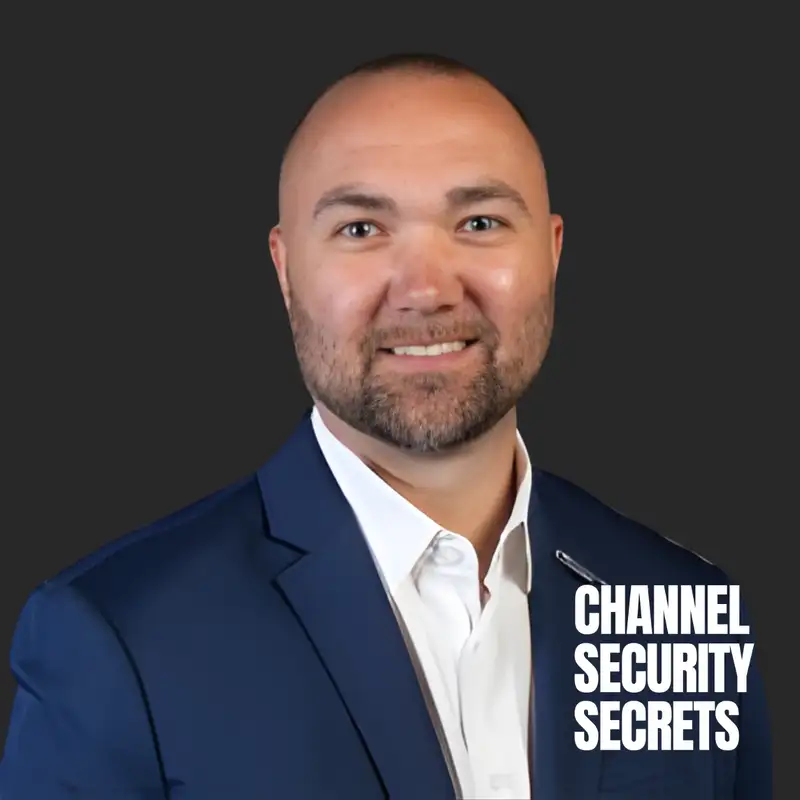
Investing in Relationship Capital - Tim Vandermel - Channel Security Secrets - Episode #19
CSS - Tim Vandermel
===
Tim: [00:00:00] whether it's security, whether it's ai, whether it's contact center, whether it's whatever, um, you, if, if you do this the right way, you can open up a lot of doors.
Lou: hi everyone. I'm stoked to chat with our guest today. He's an award-winning, trusted advisor and global technology leader, a proud US Army combat veteran of Iraq. He was twice awarded the Army commendation medal. [00:01:00] Recognized on the Channel Futures Technology Advisor 1 0 1 list for his leadership and impact in the industry.
He specializes in developing enterprise IT strategies across ai, cyber defense, customer experience, and cloud he's currently the global technology advisor at C3 Technology Advisors, Tim Vander. Mel, welcome to the show.
Tim: Uh, Lou, thanks for having me, man. I'm glad we got, uh, past some of these, uh, technical difficulties leading up to, uh, right now.
Lou: Oh yeah, tech Gotta love it. jumping right into it, what's, what's the biggest secret to your success in the channel?
Tim: Yeah, for me it's, uh, it's really building that relationship capital. So, you know, being here for 13 years,
you know, that ability to create and develop relationships, uh, has been key for me. Um, just being like genuinely curious. Uh, like I, I enjoy when I get to meet somebody for the first time and they're expecting. Me to like dive in and go in for the like, oh, hey, let me [00:02:00] tell you about C3. Uh, I actually prefer to really get to know somebody and actually go as long as we can before business is really like talked about. Um, uh, you get to, you get to really truly understand who they are as a, as a human being. Uh, understand like their life story. because typically what happens is like towards the end of that coffee or lunch or whatever, you're, whatever you're doing, it's, it's usually the other person that's like, Hey, you know what, we, we've spent like the last 50 minutes or so, like talking about like, you know, just like each other personally.
Like, Hey, what it is that you, that you do again, but you need. You need that personal foundation in order to be invited to have that, that business type of, of conversation. And, um, so yeah, for me it's, it's really about that, that human connection. Uh, it's, it's fun.
Lou: Yeah, we've, we've heard that repeatedly on the show that, you know, being genuine, uh, trying to figure out the other person from a, a friendship or a authenticity point of view. [00:03:00] You know, not being transactional, but being al like a solution seller. These are all good things. So what are some of the things that you do to kind of, once you make that connection with someone, what do you do to maybe nurture those relationships?
Tim: yeah, as far as like the, the how, um, you know, it's, it's really not rocket science. It's, you know, it's some of the traditional ways that you would,
Lou: I.
Tim: Uh, that you normally go about it, you know, whether it's meeting somebody and events that you're either hosting or are not hosting, you know, it could be a, a big like industry event like RSA or black hat. Um, or like for us here in Grand Rapids, we have, um, we have a, a really big security conference called Geron, and it usually gets, uh, quite a few people that, that attend there. But, um, again, just kind of going back to the curiosity thing or like, you know, bumping into people at events and just saying like, Hey, uh, I remember our previous conversation, like, Hey, how, how was this project going?
Or, Hey, I remember you talking about your family, or, you know, something that happened, [00:04:00] uh, personally in their lives. Like, Hey, how, how are you? How are you doing? Um, so again, just trying to avoid the whole, like, Hey, what do you, what do you got from me, you know, uh, lately, or, Hey, what's, what's a project I can help you out with? Just trying to avoid that at all costs. 'cause they, let's, let's be real. They know, know what we ultimately want to talk about. They,
Lou: Yeah.
Tim: They know. So, uh, uh, but if we can get invited to have that conversation, I just feel like it just, it breeds for a more like authentic and like transparent, uh, type of relationship.
Lou: Yeah.
Tim: But then, but then also being like professionally persistent about it. Um. You know, some people like to do the, you know, the, the calling or the emailing like once a week. So like, whatever is like appropriate for your per uh, personality. Like for me it's like once every couple weeks, you know, if I see something, uh, or if it's been a while since like we've texted back and forth, you know, texting relationships are, you know, that's, that's like what you ultimately wanna strive for when you're building a relationship with somebody.
But just being like professionally persistent and not being a weirdo about it.
Lou: Yeah. Yeah, that's good. [00:05:00] Not being a weirdo, that's good advice too. Not stalking behavior, not acceptable, things like that. And what about security? Uh, you know, are you having a lot of security conversations?
Tim: Uh, yeah, we are. So, um, I would say more of the
Lou: I.
Tim: Of the topics these days are, of course, ai.
Lou: Yeah.
Tim: Wants to talk about ai, you know, how do we govern it? How do we protect it? Uh, but how do we allow people to actually, you know, effectively use it? Um, enterprise Observability is coming up for, for us as of recent, so, um, and there's a lot of different ways you can take that.
Um, but then, yeah, automation and like the, the soc, um, that's another big one. And of course your traditional, like E-D-R-N-D-R-X-D-R type of stuff. But yeah, those are, those are the few things that we're, we're talking about here at c.
Lou: Yeah. With ai, what, what are those conversations like? I mean, are they, and, and who are you having them with?
Tim: Yeah. So, uh, so for us, because we're, uh, we're an agnostic advisory firm, we're, [00:06:00] we're not like exclusive to anybody. So, um, that's the fun part about what we get to do is we get to have, um, well one, we get to have all these conversations with, uh, you know, different clients and, and prospects. But then from a, from a market perspective. the research and all the different types of vendors and solutions that are out there. It's really, uh, it's really, really fun. But, uh, to answer your question, uh, automation in, in the soc or automation within the security realm. Uh, so think of, um, you know, those, those SOC analysts, you know, sometimes those people are really jumping around from, you know, one organization to another. So a couple of, uh, projects that we're working on right now, uh, with a company called, UH, torque. How can We Automate, you know, that, that specific. Um, uh, I would just like function within the SOC environment. So instead of like you wondering, you know, what that alert is or having to worry about what your next step is, once that alert comes in, this AI agent, uh, based off of the parameters that it's, that it's been given, it'll go and it'll, you know, [00:07:00] provide you the outcome that you're ultimately looking for.
But, we'll, while still having that, uh, that human in the loop.
Lou: Yeah. Yeah, that's good. And um, is it, uh, it's funny because when you read the news, you hear, uh, enterprise, everyone's using ai but no one's paying for it, right? So, are you actually finding customers that are, are willing to pay for AI solutions?
Tim: Uh, we only have a few today. There's a lot that are still being like evaluated. Um, and it's, it's really tough and you're actually touching on, on something that I was hoping we were gonna dive into today, which is, you know, every time we turn on our computers, or every time we pick up our phones and we go through LinkedIn, there's always some new, article or, you know, somebody just bought somebody and it creates this, you know, continual, whether you want to call it like, you know, FUD or fomo, but it continues this buzz around it.
And unfortunately, I think. There's a little bit of fatigue going on. Uh, and maybe a little bit [00:08:00] can be, that can be like debated. 'cause some people are probably like, no, it, we, we really, truly are fatigued on this. But,
Lou: Yeah.
Tim: Um, uh, but yeah, it's just, there's just so much thrown, thrown out there at an industry level and it's, uh, it causes confusion.
But at the, at the end of the day, people truly are interested in seeing how far they can take AI within their environments. But, um, it's hard when you see like, you know, things like the MIT come out or, you know, c uh, CIO dive that say. 95% of AI projects never really go anywhere.
Lou: Yeah.
Tim: We're always combating, uh, against something.
Lou: Yeah, I think that fatigue is, is definitely fueled by the industry to your point, because uh, you might have gone to RSA this year or black hat and you know, there were, I always go on the peripheral. I, there's always the big vendors and they've got the big booths and you know, you might say hi to some people, you know, but it's always really interesting to see, well, what are the up and coming companies doing?
And then every single company had AI obviously, 'cause they had to probably to get some [00:09:00] investment money. It was literally like a bunch of AI soc companies all next to each other, and all of them were solving, you know, they were the best at it, but really nothing new. All of them just had almost the same pitch, and they literally were right next to each other.
I kind of felt bad for those, you know, sales teams because, you know. End marketing teams, how are they gonna differentiate? But I think, you know, this bubble shall burst. I'm not gonna try to declare when, but could be tomorrow, could be in two years. Uh, probably somewhere between those two. But yeah.
Tim: Yeah, I mean, especially when you see all the, you know, like today, uh, what it was like open ai, CrowdStrike and, uh, and AWS or there was like a, a combination of those three about, you know, now they're going and investing and they're gonna go do something really cool. Which, which is great. Like we want that innovation to happen.
But I think, uh, I think sometimes it's, uh, it's funny how quickly we forget that we have to. [00:10:00] Um, we have to have an idea, uh, or I would say we have to have an outcome that we're trying to strive for here. Like, the technology can be great, but what are we ultimately trying to do with this thing?
Lou: Yeah, that's a recurring theme, uh, on the podcast too. And, you know, I'm very happy that we've trademarked the term outcomes based security. Uh, the more and more people are talking about it,
Tim: Yeah.
Lou: Uh, and, and so yeah, it's really about outcomes. So. When you're speaking to customers about solutions, um, you know, how, how are you structuring that, that that conversation so they're not distracted with either the shiny, like, Hey, I saw this tool, I want to use it, or they're, um, uh, you know, they have misconceptions obviously about what cyber is.
Hey, we want a pen test, that's all we're gonna do this year. You know, what do those conversations look like and how do you drive them to be more, you know, longer term thinking?
Tim: great question. So, uh, I guess we will tackle the first part of that. Um, you know, we, we pride ourselves on providing a [00:11:00] process to all of our clients. So, uh, again, kind of going back to the relationships, once you've built a relationship with, uh, with a a c level, um, or, or whoever, um, you, you, you can ask. Specific questions that you may not be able to get away with, like, you know, asking that person in your first or second meeting. So sometimes that relationships will allow you to get away with things or allow you to like poke, uh, poke them in the chest. But for us, um, we, we run a process so, um, you know, understanding the needs and the requirements of what again, that organization is trying to solve for. But then throughout that process where we're constantly. Uh, doing like a temperature check, like, okay, we're going in the right direction. All right, cool. All right. Now we're gonna go to the market. Now we're gonna identify like those fir those first, like, call it like three to four different types of vendors or solutions that ultimately meet the outcomes or can meet the outcomes that. the organization, uh, is, is looking for. So it really that, that, that part is really fun. And when organizations go through it, uh, like time and time again, they're like, [00:12:00] wow, you know, this is so much easier. And this is not a knock on, you know, some of the, the bigger, uh, fellows that are out there, but you know, some of the large VARs or you know, the Accenture's are Deloitte, it's like, wow, we were able to accomplish this in a, a fraction of the time.
You know, versus dealing with some of those bigger guys.
Lou: Yeah.
Tim: But with that said, you know, just to, you know, uh, kind of give one back to back to them, you know, sometimes they're better suited for, uh, for, for conversations than, than we are. And that's just being honest.
Lou: No, totally. Well, I mean, they're definitely well suited for, uh, no one's going to get fired for hiring, you know, ey, pwc, insert Big four here, or, you know, a big enough organization that can afford those bills and needs like, you know, very serious management consulting across, you know, uh, 50 global offices or something.
They're, they're uniquely. Position for that. Um, but that's the use case versus, you know, a mid-market company that is just starting their cyber journey or something. It doesn't make sense, obviously.
Tim: Yep.
But Lou, The, the second part of your question I want to make sure I I [00:13:00] address that is like, you know, how are we, how are we bringing some of this new stuff to, uh, to organizations, um, or, or, or to our, our client relationships? Uh, it's, it's not foolproof. Uh, there's a lot of trial and error. Again, it goes back to the curiosity. Um, it's always trying to find that thing that, yeah, the other person on the other side doesn't have. Uh, we, you know, we sometimes we hear that quite a bit. Like you guys actually brought something to the table that we weren't really thinking about, or maybe we weren't thinking about in the right context.
So, hey, because you've done this, uh, hey, yes, now we're willing to invest more time and I'll bring my leadership or my team and let's go see how this thing may, may actually, uh, actually fit in there. Um, we're, I'd like, I'd like to think that we're pretty creative when, uh, when we have, uh, situations like that. But then also we also have, uh, some engineers on staff that are way, way more smarter than I'm, um, that can actually back up some of the things that we're, we're trying to at least spark like a little bit of curiosity with. So, um, that always helps. [00:14:00] But again, for everybody out there, I'm sure everybody does a, a, a little bit of a, a flavor of that.
But, uh, again, we're always looking for something that. that somebody may find interesting,
Lou: Yeah, yeah. That, well, and that can also solve pain, right?
Tim: Right.
Lou: So that's, I think, really the most important part is that we need to solve pain for our customers. Uh, we can't just bring them a bunch of solutions that don't, uh, connect to that or, or we're not gonna be successful.
Tim: Mm-hmm.
Lou: Um, and you mentioned, you know, the vendors, picking the vendors and stuff.
What's your process for that? What do you look for in vendors?
Tim: Uh, yeah. Kind of going back to the process, uh, you know, sometimes we have to be really nitpicky, uh, you know, if we're, if we're building an RFI or an RFP for our clients, you know, sometimes, you know, there are lack of like following directions or getting information in on time. Sometimes we have to get to that like, nitpicky level to say, you know, Hey, these three or four different, uh, vendors or solutions can, they can all do the same thing. so at, at some point we do have to be nitpicky, [00:15:00] but, um, of course, you know, it's your, it's your, um, you know, stuff like Gartner. You know, we, we always, um, you know, stack up our own in, uh, internal, uh, market intelligence against what, like the Gartners and the G twos and, uh, and heck, even a lot of our, uh, our clients today, um, or even, uh, prospects that we know that may have a, uh, certain type of solution. We, they may not have bought it from us, but we have a good enough relationship with them to, to ask. So. Um, so yeah, it's really trying to use all the data that we're getting from our clients and our networks and from the vendors and helping the organizations that are ultimately trying to find that solution, like help them kind of weave in between like the BS and the, um, and the, the minutia that that always, always happens in every single project.
Lou: Yeah, so well, so being responsive. Uh, you know, showing up, uh, well for calls, right? And, and, and things like that. But also being able to provide the solutions. And then inevitably, you know, if you're working [00:16:00] with a vendor mul, uh, across multiple clients, you're, you're going to start to see how they handle adversity, right?
Because it never is perfect. Um, what, what separates the good ones from the bad ones?
Tim: I think for, for me, the, the ones that make the POVs really easy, like the proof of values, uh, the ones that are like, Hey, yes, we're willing to, you know, invest time and resources to, you know, kind of prove out our worth or prove the solution to you. Uh, I think everybody claims that they do it, but you can quickly identify the ones that do a little bit better, because sometimes they will actually be forthright and say, Hey, um, you actually don't even really need us in the mix.
Just go to our website. You click on this very safe link and you go through this process. And then, hey, if you run into any issues, like, hey, you know, call us and, and we'll engage and we'll, we'll walk through it together. So I think for, for me, uh, of course there's all the, the things that, you know, they claim that they can do, but. It's what better way to prove it out than doing a, a proof of value?
Lou: Right. Yeah, [00:17:00] that totally makes sense. And, uh, kind of bringing it back to TAs now, uh. There's a lot of TAs that wanna sell security. Uh, they, they don't know how. Um, you know, I've spoken to other TA firms like, like C3 and I always ask, Hey, you know, is there a secret sauce you don't want to give away or something?
And whilst there might be some, essentially we need more people enabling this channel, right? And so, so I, I think it's, there's no risk for you to share. Maybe not a secret sauce, but just some secrets of, you know, since this is channel security secrets, uh, some, some things that, you know, ways that you look at, um, how to sell security, but especially for those TAs that are just getting into it.
Um, what, what advice do you have for those TAs?
Tim: Yeah, the first is, is go for it. Um, you know, lean in, uh, you know, most of us work with, uh, a distributor or two, so. Lean into your distributor [00:18:00] relationships, um, you know, sign up for, uh, webinars. Um, you know, take as much time as, you know, our distributor, uh, friends will, will, you know, will, will give us. Um, but yeah, really lean in.
Uh, so, and I wanna be a little bit more focused than just saying, like, lean in. If there are certain aspects within cybersecurity that are really interesting to you, like, hey. AI and security is probably something you should be focusing on. Not to say that anything outside of what, you know, what, what we've already talked about isn't important.
But if you, if you're truly trying to get in front of people and, and be interesting and be a thought leader, uh, lean into some of the things that are gonna be a little bit more forward thinking. Uh, for us, we have, we have tried and we have failed, uh, so many times when it came, when, when it comes to cybersecurity, um, you know, we've tried, uh, helping people. Um, like actually build their own programs for things and we've quickly identified we're just not built for that. And you know what? That's okay. Like, that's okay when we realize you're just probably not the good fit for something. [00:19:00] for us, we really started taking security seriously, uh, about a year before we hired our first, uh, engineer. And he was, he was pivotal in, in helping to, under helping us understand like, Hey, this is, this is what you need to be thinking about. Or, Hey, if you're going after, you know, this type of a persona, here's some of the things that they're really gonna be worried about. You know, um, so that for us, you know, staffing and hiring engineers just for like the tech evaluation piece, not necessarily to like, you know, roll trucks or to like, you know, unplug and, and plug in wires.
Um, engineers has been really good for us.
Lou: Yeah, and, and why should TAs sell security?
Tim: Uh, it can be really fun and those relationships can help spur you into other areas of the business. security touches a lot of different things, so if you can do a really good job. you know, working with a security team at whatever size organization that is, chances are they're probably going to tell their friends internally or their friends in their [00:20:00] network, like, Hey, you know, so and so, they ran a really good process. man, they really shielded me from having to talk to like 10 different yahoos that were and their only job was to sell me, you know, or trying to convince me that their solution was the best. So like when you hear that over and over, it's, really fun and you can, again, you can kind of pull that into other different areas. Um, very specifically, uh, data center and colocation. Uh, of course the big, you know, wide area networks that, uh, a lot of the TAs that's kind of like where they were born and bred from. Um, but again, now going into the AI space and the, the context center space, there's always going to be a place for security.
So the, the more that you know about it, the more you can, uh, get in front of people and talk about that. I just think you're setting yourself up, uh, for success down the road.
Lou: Yeah, that's great. And, um, it's also, I, I think you mentioned it, the, uh. Kind of stickiness, you know, that, that it opens up, right. Those you definitely mentioned the data center and other [00:21:00] opportunities. And also, yeah, they'll go, they'll come back to you and be like, yeah, this may not be the highest, um, invoiced item that, uh, the TAs will do compared to a data center sale or some, you know, huge.
You, you see, uh, CX sale. But it will keep them coming back and it's something that's usually renewable every year versus selling it once, uh, for three to five years and then, you know, waiting for renewal.
Tim: Right.
Lou: Yeah.
Tim: Yeah. And I, you're actually hitting on something, the it, the write down of revenue doesn't necessarily happen the exact same like it does in the, the traditional WAN side. You know, the price for bandwidth continues to, to go down. Uh, but yeah, on the security side, there's always gonna be, I don't wanna say like more inter uh, more innovation, but there's gonna continue to be really cool things that are gonna come out that will really keep us busy. Uh, even if you're a TA that is, is solely focused on security, uh, you could, you know, if, if you're listening, you probably agree [00:22:00] that there's always going to be something, uh, that allows us to consult and, and get in front of our clients with. So, uh, but yeah, again, if you're, if you're brand new to the, the space or brand new to security, dive in.
Learn as much as you can and understand that there are no silver bullets.
Lou: Oh yeah.
Tim: And don't always believe, uh, believe what you, what you read on LinkedIn from some of our peers.
Lou: Oh man. Yeah, I mean the, the security gurus, luckily that's going, um, a away a little bit. It's kind of like, I don't know, two, two years ago, I think I was at a, it might have been channel Partners in Vegas and some guy had this really shiny card. He was like an AI consultant. I looked at, you know, I went on his LinkedIn, uh, you know, previously he was a real estate agent, um, had no technology experience, but he was, you know, out there.
And if you're listening, I hope you've, uh, kind of moved on, or you're, you've educated yourself a bit in a sense then, but, but it's the same with the security people that, um, you know, there's been these gurus and stuff. The, the, you know, who the, the [00:23:00] real ones are. If you've been in this industry for a while, you know.
Then you see the ones that are popping up that are just kind of, you know, taking advantage of people not knowing what they're doing. I mean, that's definitely one of the advantages of ai. This, um, you know, the, the seller's advantage is going away, which was the, um, you know, having more information. Than the buyer.
It's kinda like car sales, right? Like once CarMax and, and the internet came around, uh, used car dealers just couldn't play the same games that they used to because all the information was out there. And if you're an informed buyer, you, you basically, it, it's, you know, information. What's it called? Uh, the.
The disparate information, basically someone having more information than the other. So, so, um, yeah, security's changing. Luckily we're, we're getting away from that a bit, but there are still those people out there, you know, hawking, the snake oil, et cetera, and it's, uh, just not great. Now it's AI snake oil.
Tim: [00:24:00] Yeah. Yeah. And actually two more quick points. 'cause I, I, I'd be, I'd be embarrassed if I didn't at least mention this, at least one point. But, um, are you, we have so many awesome people in our industry that are always willing to help or out a phone call to share how, you know, they've done certain things.
Uh, we hear that all the time. There's a lot of. Uh, uh, a lot of organizations that, that we look up to and we always kind of joke internally like, man, it'd be kind of cool to be like them when we grow up. Um, and we have some really cool relationships with them. But, uh, but yeah, don't be afraid to, um, don't be afraid to like, reach out to, to somebody, uh, and just have a conversation and just say, Hey, how, how do you guys do that?
Or, Hey, can you tell me a little bit more about your approach when it comes to, to this? I, I think you'd be, uh, you'd be surprised at, uh, as to how many people would actually jump at the opportunity, uh, to do that. Um, and the, the other thing is you'll, you, you're just kind of solidifying your point. There's a lot of people out there, um, that, that truly do have integrity and they're always trying to do the right thing.
So, [00:25:00] um, there's, there's, there's enough of us out there. Yeah.
Lou: Yeah, yeah, big time. It's, it seems to be a collegiate. It's, you know, uh, channel is a smaller world than everyone thinks, and cybersecurity is actually a tiny. World believe it. Or even though more and more people are, are piling in. And the ones, yeah, the good ones are very collegiate and open to sharing information and stuff as, as well we should be.
'cause we, at the end of the day, it's not, you know, we wanna make money and sell stuff, but we also wanna protect these environments that we need to. And so, yeah, it's really important. What, what, what excites you, Tim, about the future and all this fun stuff that's happening?
Tim: Uh, there's just so much potential. Uh, yeah, I, I, again, we, we talked about this earlier. There's so much. and, and doubt and uncertainty going out there. And I said that in a completely wrong order. But, um, yeah, there, yeah, right there, there's a lot of like, negative stuff that's being thrown out there.
But, um, I, I'm really optimistic, uh, [00:26:00] to, to what the future holds. Uh, again, everything in again, depending on how you're looking at it, it can be a little, uh, scary. It can be a little daunting. But the cool thing is if, if we're doing this the right way, we can actually use this to open doors. Um, so whether it's security, whether it's ai, whether it's contact center, whether it's whatever, um, you, if, if you do this the right way, you can open up a lot of doors.
I, I can, I can think of at least a dozen relationships right now that I have today that, that we may not actually be doing anything formal from like a, a business perspective I asked them certain questions or we had certain conversations around a, a specific topic. It, it opened up a door to where it's like, all right, we, we, we, I think we need to have each other in our network.
So, we'll, we'll see where that goes, but that's what really excites me is, um, these doors that are, uh, you know, that you can't open. We'll, we'll see what happens, uh, with them down the road.
Lou: Yeah. Very cool. And, uh, you know what, what got you here? You've got [00:27:00] this like insane combat veteran background, uh, you know, and, and you were infantry, which means that you were like, you know, in right in it, and which is not, you know, nowadays I see all the tech. That the guys are wearing. I'm just like, man, I would be so annoyed with all the wires and the batteries.
It's like, oh shit. But, um, you know, so you were, you were there and you transitioned somehow. So I don't know if you wanna speak at all about your combat experience, if 15 months in Iraq or, um, you know, basically how you made the transition.
Tim: Yeah. No, uh, appreciate that. So, uh, the transition for me, uh, I, I think it all kind of happened on accident. I say that in like the most positive way. Like I'm a big believer in things happen for a reason, so. Um, so when I came home from Iraq, I, I went back to, uh, or I should say I went to college as an adult, so I was like 22, 23, and I went and got my degree in like three and, uh, three and a half [00:28:00] years.
So I would work full time, and then I did the school thing at night just to try to like, you know, uh, do as much as I can. But, um, uh, I, I, I gotta give my, my guy Matthew, uh, our CCEO and, and founder, a lot of credit. So, uh, him and I knew each other, uh, uh, personally, uh, through like a friends group. Uh, one day back in, uh, it probably was like late 2011, early 2012, um, I was working for a very large healthcare system at the time here in West Michigan, and he threw out a, a, a post on LinkedIn and was like, Hey, you know, I'm, I'm looking for my first employee. Uh, hey, if you know anybody, uh, hey, I'd, I'd appreciate a recommendation. The funny thing is, Lou, somebody else in mind, so I reached out to him and I said, Hey, you know what, what exactly are you looking for? And I didn't give 'em the context that I was, that I had somebody in mind. Well, he texted back and he said, Hey, you know, we're, we're friends.
That might be a little bit weird. And I, I just, I kind of like let the conversation die. 'cause again, at the time I thought, you know, where I was at was gonna be, you know, a place where I, [00:29:00] I I was gonna retire from. a couple of weeks later, uh, he sends me a text and he goes, Hey, um, can I take you out to lunch? And I never had a grown man ask me to, to take me to lunch. So I was like, okay, sure. So we, we spent about two hours at lunch and, um, he was telling me about, you know, what C3 was, um, you know, what exactly he did and where he thought the organization was gonna go as, as well as the industry. mind you, Lou, outside of like working in iPhone, I didn't know really technology.
I, I didn't know consulting or the sales game like at all. So I go home and my wife's name is Stephanie. She's pregnant with, uh, our firstborn, uh, who just turned 13 on Sunday. Super proud of that. And I said, Hey, uh, you know, I just had lunch with Matthew. We had this great conversation. Um, I, I think he's gonna offer, offer me a job.
So like, Hey, what do you think about this? So, Lou, the, the eerie, eerie thing and kind of the fun thing about this is if she says, no, we're not, we're not talking right now. And even, even if she [00:30:00] says, maybe we're probably not talking right now, but the fact that she was like, I trust you. I, if you think you can do this, like, hey, let's give it a shot. Um, and I, I, I thank her every day for, uh, at least giving me like the thumbs up, saying like, Hey, yeah, well, let's give this thing a shot. 'cause, um, I, I enjoy that. I get to do this every single day. It is so much fun. So, so yeah, there you go. I didn't know sales, I didn't know technology. Uh, Matthew just, uh, he saw something in me with, you know, the, the military experience and the fact that I had stayed at my previous employer for a really long time.
So he knew that I was, I was loyal to. Um, uh, you know, to the organizations that, you know, that, that gave me a shot as well as the, the military stuff. So, uh, so yeah. And it's been just over 13 years and it's so crazy to think about that.
Lou: That's a, I know time is like flying and especially COVID. There's pre COVID and post COVID time. Just like a time warp, right? But kudos to Stephanie for being a great partner. I think there's a lesson there too, you, you go to your partner and you say, Hey, [00:31:00] I want to take a shot. And they're either like, oh gosh, you know?
No, absolutely not. We stay with the big logo. Or, you know what, what she did was like, yeah, I trust you. Go for it. Especially with. A baby on the way, like about to pop, um, or had just been born. That's pretty impressive. So we'll give a little shout out to Stephanie as well.
Tim: Absolutely.
Lou: That's great. That's really cool.
And, uh, you know, what, what else are you doing in your spare time now? Um, you, you've got kids, uh, so that's probably taking a lot of your time. 13, they, it's a different type of time that's taken up at that point. Maybe some sports or something.
Tim: You know, uh, yeah. So my, my daughter Charlie, she just turned, uh, 13 and my son Hudson will be 10 in, uh, in January. So I, I have two. Uh, very, uh, healthy, beautiful, uh, kids. Um, I, I, they definitely keep me busy. We don't, we're not as busy in the, uh, in the sports stuff. It's because I completely ruined that a couple years ago, um, I was, uh, [00:32:00] I played sports in high school, so I was always looking forward to being like the sports dad.
Lou: Yep.
Tim: I went way too hard, way too quick on both of my kids,
Lou: I learned that.
Tim: And uh, finally my daughter was like, uh, her after her last basketball game, she's like, dad, I love you, but I don't really want to play anymore. And like, ugh, broke my
Lou: Yep. Yep.
Tim: Course her little brother was like, yeah, dad, I, I don't really want to play either.
I'm like, well what, what have we been doing? And they're like, well, we only really wanted to play 'cause we know how much you liked it. So, of course. Tug at the heartstrings a little bit. Um, but, uh, yeah, I, I think they'll come back, at least my son. Um, but yeah, outside of that, uh, I love playing golf. I'm not the greatest at it, but I really do enjoy it.
And, um, yeah, just spending time with, with family and friends, uh, up at our, uh, up at our cabin is always a good time too.
Lou: That's awesome. Yeah. I've got a similar story about the, the kids in baseball and I, I was, I coached, uh, both of 'em and then, yeah, neither of 'em play now, so it's like, and they, they got out as soon as they get [00:33:00] same stories, so listen to the new. Dad's out there that, that are trying to be, yeah, and I didn't think I was overbearing, but then my son told me, you know, and now he's uh, gonna be 18 in a week or something and he is like, dad, yeah, when you would embarrass me so much when you'd yell at the umps and stuff, because I was a little bit psycho, I guess.
So anyway, that's um. It's good. And you got, um, obviously, uh, up there in Michigan, you got lots of space and it's, uh, probably starting to get a little cold. I don't know if you're, you're the weather's changing yet, but
Tim: Uh, it's, uh, it is getting chilly. The, the leaves are turning, which is always a really pretty time of the year. Um, but uh, yeah, they are calling for snow on Sunday, which
it'll just be a trace of it, but.
Lou: Still.
Tim: Know if I'm ready yet. I keep going back and forth. I don't know if I'm ready yet,
Lou: Yeah.
Tim: Whatever.
It's gonna happen regardless.
Lou: the advantage is you get those beautiful summers and, and uh, you know, nice and green and stuff. Uh, so, so where can people [00:34:00] connect with you, Tim?
Tim: Uh, yeah. So, uh, LinkedIn, uh, that's probably the, the, the biggest way, um, yeah, yeah. Connect with me on LinkedIn. I don't really do the Twitter thing.
Lou: I.
Tim: Uh, I got off of that a long time ago, but, um, but yeah. And then, uh, yeah, check us out on our website, uh, c3 tech advisors.com. We are super, super pumped about our big tech summit that's going on next Wednesday, uh, here in the West Michigan area. Uh, proud to announce that we officially, I think it was as of yesterday or two days ago, we crossed the 500 attendee mark. Um, which is something we've never done before. Um, and we definitely have the space at the venue that, uh, that we have here. But, uh, but yeah, we're, we're super stoked about that. Uh, it's the biggest event, uh, of the year for us and, um, we've been working really, really hard to, to make next week happen.
So, uh, shout out to our marketing and events team at C3.
Lou: That's awesome. Well, hopefully if you're in the area, go, go see it. Go go to the expo. And uh, that's a big, that is a big milestone, getting 500 people to [00:35:00] show up for any event unless, you know, you're, you have lots of free food and stuff. Uh, so they, they obviously want to be there and wanna learn, so that's awesome.
Tim: Absolutely.
Lou: Thank you, Tim Vander. Mel, it's, it's been great to learn about, you know, how you approach the channel, what's important to you, uh, you know, how you're thinking about tech. Really appreciate you sharing your insights today.
Tim: Uh, appreciate it, Lou. Thanks for having me.
Lou: Absolutely. And, and thanks to those that are watching it are listening. If you learn something today or laughed, please tell someone about this podcast.
Thanks again, Tim. And this has been another exciting episode of Channel Security Secrets. See you next time.
[00:36:00]