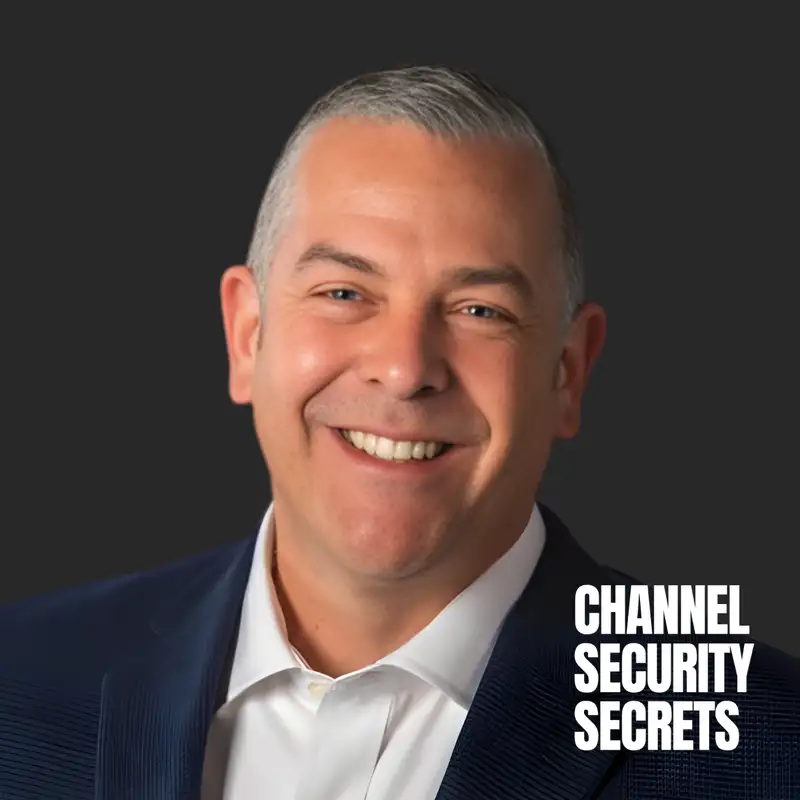
The Importance of First Principles - Alvaro Gonzalez - Channel Security Secrets - Episode #21
CSS - Alvaro Gonzalez
===
Alvaro: [00:00:00] the things that I've done well, it's because they're built on a good base. They start from first principles and go up.
Lou: Hi everyone. I'm ecstatic to chat with our guest today. He's a global channel leader and go-to-market expert.
After starting his career in higher education, he pivoted into technology and has spent nearly two decades driving innovation across the industry, a recognized [00:01:00] channel voice. He has shared insights on platforms like the BrightTALK Panel and Avant It Expo. During his time at Thrive, he spearheaded go to market strategy, aligning alliances, resale, and channel partner groups worldwide.
currently the Vice president of Global Alliances at Assured Data Protection. Alvaro Gonzalez, welcome to the show.
Alvaro: Hey, thanks so much. I'm so happy to be here.
Lou: So, Alvaro, what's the biggest secret of your success in the channel?
Alvaro: Um, you know, I, I would say that my, the fundamental bedrock of my success in the channel is actually wanting to go to the first principles of everything. Like you mentioned, my former career in higher ed, like. doing a lot of homework and getting to the things that are the foundation for everything that you build above.
It has been something I've been working on for all of my career, and I think it's, uh, it's been kind of like, uh, the things that I've done well, it's because they're built on a good [00:02:00] base. They start from first principles and go up.
Lou: So explain that to me a bit more. What, what's an example of a first principle?
Alvaro: Yeah. So, um, you know, actually I was just reading yesterday on LinkedIn. You could read it pretty much every day on LinkedIn. Actually, uh, someone in the industry, it's actually a trusted advisor who was talking about. Um, an AI bubble and how, the big debate was, is there an AI bubble? And is this going to be something that a year from now, two years from now is gonna burst?
Is it gonna be a problem? And kind of the discussion that went beyond all of it was a mistake that so many people are making is they're chasing what's being talked about today. They're chasing what's new. Instead of chasing what's true in cybersecurity and everything else, there are lots of shiny objects.
There are lots of kind of things that are steps along the way, but if you start building from the roof and you go down, you're gonna have potential issues. Whereas if you start from [00:03:00] a first principle, um, there was actually a great book that, uh, talks all about this that I find super compelling. That was actually, uh, cybersecurity First Principles is the name of the book. And this guy's thesis for the whole thing is just start. With, um, this first principle
Lou: This book right here.
Alvaro: else?
Yes. That up to you. But, uh, his is, you know, hey, the first principle of a cybersecurity program should be to reduce the probability of material impact from a cyber incident over a period of three years. From there, you can make all kinds of decisions and have a framework about. good, what's not, what serves that purpose and what doesn't That allows you, again, from the right foundation to build up and you got something stable. as opposed to saying, I'm gonna buy a bunch of tools and figure it out, right? Like one starts from solid and goes from [00:04:00] to more and more theoretical. Uh, one doesn't, and the one that like can be stable is the one that you can build on.
Lou: Yeah, this makes sense. So I, I, you know, we might reframe that or rephrase that as the why, like why is a customer asking for this, why we often get inbound requests for like a pen test. Hey, we want a pen test, penetration test for those that are new to that. And it's, um. And then we, you know, say, well, what's their security program look like?
And they say, well, we don't, you know, we don't know that. Or, Hey, they just want to tick the box. And then as we dig, we realize, wait a second, there's, you know, they don't need a penetration test. They, they need an assessment. They need to see where their program is. But if we didn't ask why, and yeah, to your point, start from first principles, we might just give 'em a quote for a pen test, which they might or might not buy.
But that's also not establishing a long-term relationship.
Alvaro: Absolutely. Well, and you know, the truth of the matter is too, like even just the why, like the why can be, I did a, a brief [00:05:00] turn in consulting stuff and I'm super nerd. I read all the time, why can be what you call necessary but not sufficient. it's awesome and it's the right question. Anytime someone says, I need something specific to ask, Hmm, why, what for?
What do you intend to accomplish with that? Uh, but sometimes it's actually like. Five wise, uh, you know, 10 wise to get really drill down, drill down, drill down, drill down, drill down, drill down to get to the, you know, the real basis of everything that's gonna let them get to
right outcome
Lou: Yeah. And that's, I think the first principles, um, you know, kind of methodology is really important. 'cause that's how you get down to it. Yeah. Like, okay, a pen test. Well, what, what's the program look like? What are you doing? What have you done traditionally for security? All these things. When's the last time you did a tabletop?
All, you know, that'll, that'll lead you to the, the answer you're looking for, which is
Alvaro: Absolutely.
Lou: Or the information you're looking for. You don't necessarily know what the answer's gonna be, but you're looking for the information.
Alvaro: [00:06:00] Absolutely
Lou: That's really good. And so, um, can you gimme an example of one recent, um, kind of, uh, conversation that went that way with first principals where maybe you started high level and you, you were able to get down to the bedrock.
Alvaro: Yeah, we actually, um, so, at assured data protection where I'm working now, this is a conversation that comes up actually all the time because, um, our company is fundamentally a specialist. data protection and business continuity, and people think that they understand super well what that is. And so they'll come and they'll say, Hey, listen, I need to get a quote from you guys. Um, our principal data protection platform is rubric. That's like one of our very big specialties. And they're like, yeah, you know, um, I need backup. that's what it is. So here you go. It's, you know, this number of terabytes, this retention interval, this, this and this, that, and like, that's gonna let us get it done. And um, you know, you kind of can go down a predictable path. [00:07:00] Interesting. Okay, that's cool. We a hundred percent can do that. But tell me this. What is it that we're backing up and is it everything that we're backing up? Are you talking about just your kind of like garden variety main stuff? How much exposure do you have to PII or unclassified sensitive data?
What do you intend to do with all of this data that you're generating and backing up? and one of the like, super common ones that, um, lately has been a big conversation there too, that you get down to, people say they want backup because they think it's gonna be enough. To give them resiliency against issues. And you get to the point where, well, if you back up your files, but for example, you don't back up or protect your identity, then you can be in a world of hurt when right now that's a huge vector for cybersecurity attacks, right? You attack on ID you attack active directory, and effectively what it means is you change all the locks on every door in the building. You know, you don't have to [00:08:00] blow anything up. If you just deny people's ability to access it, you could do a ton of damage.
Lou: Oh.
Alvaro: Another one is just to say, gosh, alright, your backup stuff, um, let's talk about what you're using Microsoft 365 for, because that's somewhere else. And that is where you generate and you communicate a ton of proprietary data. Do we need to get that kind of thing in scope as well? And then the last one is, okay, we could have an awesome, uh, scheme, technical solution to protect all of these things, but tell me if you have a cyber incident and all of your stuff that you were protecting to begin with has become a crime scene. Where do you intend to restore any of these things to?
Lou: Yeah.
Alvaro: Right, so
Lou: Oh yeah.
Alvaro: With, again, like P, it's like the version of a pen test. No, I got backups. I'm good. Okay. Well, do you have backups of everything? Do you have backups of the stuff that you need to backup differently and having all the [00:09:00] backups in the world if you don't have anywhere to restore to?
Lou: Oh yeah.
Alvaro: Futility, right? We can do all of those things. And so it takes something, people think what we do is small and in a way I'd say it's compact, it's dense, it's not small, and it's exceedingly important to get out of people's preconceptions about what's enough
Lou: Right.
Alvaro: Say no. Like we can do awesome work for you and it's more complex, complex than you think.
So let's talk about it.
Lou: Yeah. Yeah. So that's important and, and you're obviously well placed to be having those conversations and ask those questions, uh, because you understand it, you know, it, What about, you know, in this channel, um. What are your thoughts about how, how, uh, the channel's treating security right now do you think?
Uh, there's kind of a mature motion.
Alvaro: I think that, um. I think there's a lot of different things that can be said actually about it right now. Because on the one hand, I think that, um, months ago, 20, [00:10:00] 24 months ago, there were a lot of people, uh, you know, trusted advisors, tech advisors in the industry who this was where cloud was a couple of years ago.
People who are afraid to have the conversation because they don't know how to start it, and we kind of overcome, we've overcome that. Now, I think the problem is not people being feeling unequipped or being unwilling to start a conversation in channel. It's how do you distinguish between so many different providers,
Lou: Right,
Alvaro: of whom sound exactly like everyone else?
So.
Lou: Exactly.
Alvaro: It's a good time and it's a difficult time in the channel, right? When you have so many options, some of which are extremely good, some of which are very good, some are pretty good. know, like, how do you know, how do you, how do you set your customer and yourself if you are the advisor up for success? Um, that's like the difficult part of it. So it's like an embarrassment of riches.
Lou: Right.
Alvaro: And, you know, how do you get to the [00:11:00] best outcomes out of that? That's kind of the cha the, in my opinion, right? The challenge of today.
Lou: Yeah. So let's, let's dive into that. 'cause that's the reason for people listening. So how do they, that this is a problem right now, right? So, um, for, for TAs that might not be very technical, they might already be concerned about having that security conversation. And to your point, now they've got, um, you know, uh, depending on which TSD they're going through.
Maybe hundreds, thousands of vendors that are, to your point, also saying the same thing. They're MDR that does vc, so that does this, that does that. They don't even understand half the acronyms as the ta. So, so what is your advice to those TAs that are in that position? They say, Hey, we wanna sell security, but we just don't even know where to start and, and how to choose a vendor.
Alvaro: For sure. Well, so I mean, like, listen, the, the place to kick it off because, um, while it's true that the, um, the number of people willing to have these conversations and to start them is higher than it used to be. Um, there still are all kinds of [00:12:00] people who have excellent relationships where they could be having these conversations and they're reluctant to start them because they do, um, suffer from what I used to suffer from too.
Like when I was an se for telecom, years and years ago. I felt like if I didn't know everything, I didn't know anything and I didn't want to get caught out. The truth is. That anyone who's gonna talk with you about the business challenges that they're facing is talking to you because they're facing. Business challenges, So nobody should think that. You have to go into these conversations ready to throw down on all of these intricate technical details. Those are important, but is that the first stop along the way? No, it isn't. It's actually having some ideas, which is why I find the first principles thing like so powerful.
If you have a conceptual framework that says, listen, I'm not gonna build you. the unsinkable ship, but I [00:13:00] know the things that have to be true to make an unsinkable ship. So let's talk about what a good approach is so that they can kind of capture, hey, what happens if you have unplanned for downtime.
Hey, what happens if some of these things go wrong? So that we can identify these are the outcomes we're striving to hedge against and go from there. So like having a conversation, again, that goes to principles, not to details, especially early in the process, I think is what is, um, in the way of a lot of people. Want to actually
have something very specific. They want to have. Um, it's, it's like an unpopular thing for me to say, honestly, I should probably keep my mouth shut. But there are people who talk about like the magic questions and things like that. I'm very skeptical of magic questions because the problem is that like. The reason I like principles so much, if you understand a principle, you can talk about it and it sounds like you, and you can [00:14:00] have like a way to put the pieces together you have a, you know, a magic question where it's just like, ask this and write down what they say. might not have any understanding whatsoever what's behind it.
And I just think that's a bad idea. Like when I, when I was teaching, we were talking about this the other day, um, I started out as a language teacher. so you think about all of these things like, um, the way people used to learn languages and it was memorized. Words and words and words and words and words. If you memorize the words, but you can't put the words together, what have you really gotten?
Lou: Oh yeah.
Alvaro: About it. If you get the principles, you could be off on some details, but you can capture, here's the risk they're trying to hedge against. Here are their understanding of the bad things that happen when they don't, so that we can connect, oh, these are the, the, you know, these are the conversations we should have, and then you can actually engage. Expertise behind you, including using the awesome ESS at RTSD Friends to help you to qualify the list [00:15:00] of people you know, to bring in. I would say like principles, let you have a conversation that, you know, magical questions don't.
Lou: Yeah, that's brilliant. I mean, that, that is probably one of the big takeaways that I hope people highlight and when, if they're listening right now, uh, you know, language is not just words. Language is context. And if you take that analogy. Anything in technology, but especially cybersecurity. Yeah.
Understanding the acronyms or throwing out ai, uh, you know, and, and, uh, MDR and some of these things that's not going to get you, um, you know, the ability to converse with your customer. You don't understand the underlying context of how all those things fit together, but that's not to say that you should.
Now you need to become fluent in cybersecurity as a language. What's that? What that means is you need to be fluent in business. That's your point. Like understand their pain points.
Alvaro: Absolutely right. Stuff that can
Lou: Yeah.
Alvaro: that isn't taking [00:16:00] money out of your pocket, keeping money from going into your pocket. That's. Because ultimately that's what it's for, right? It's cybersecurity in, in all its forms. It can be prevention, it can be, you know, recovery, all of these things. Um, they're, you know, they're super important, but no one's buying them for themselves.
They're buying them for what they get because they
Lou: Right.
Alvaro: when they work properly. And that is the business didn't have to
Lou: Right, right. Yeah. And, and just the fact that you understand what that means to the business. I think as a TA that's what's really important as a seller. You want to understand the pain points, and I think this is sales 1 0 1, and I am, I like you. I don't come from the sales background. I'm a practitioner.
I'm usually getting, or I was used, used to getting sold to versus being the seller. But, you know, one of the things, uh, obviously as the founder, I, I, it's founder led sales here and, um, we do have a, a great sales team. But, but basically I was able to do it effectively 'cause I understood the [00:17:00] pain as a practitioner of the, you know, peer that I was speaking to.
For the TAs, it's, you know, and this has been a recurring theme on this podcast, is if you're transactional, which has very traditionally been the case for this channel, like how much bandwidth do you need, how many users for voice, you know, all that stuff. That's, um, you know, not gonna get you across the finish line these days.
You need to be, you need to drop the transactional sale and really become a solution seller.
Alvaro: Yep. The why, like, and there are so many things, again, like I'll have a book for any topic we ever wanna talk to because the question if it becomes like, how do I get to the principles? actually there are a couple of books I think that you can look at that can take you so far. One that I love, uh, you know, me learning, like, again, I, I didn't grow up as a seller again, I was a college professor originally, but.
Challenger, I think is a really great kind of series because those kind of three points of teach, tailor, take charge, have an opinion, [00:18:00] go and speak specifically, and have a conversation specifically about what the person that you're speaking with is experiencing, and that's why the principles will help you. The, you know, magic, you know, whatever questions
Lou: Yeah.
Alvaro: the questions aren't about them, they're about you. The principles let you talk about them and then take charge to say, well, listen, you know, um, you say that you want a pen test, but for example, let's talk about why. Let's talk about what's around that because, um, I wanna help you get where you want, you know where you want to go.
I want to help you to, uh, accomplish what you're after. Um. And I think that, you know, you are in a position, not like, not unlike a lot of other people, which is why you're talking with me to begin with, and that is, you might see the need to have a pen test four times in your career. The people that I can help to bring to this conversation, to add it along, have seen a thousand pen tests a year for the last 10 years. To bring real expertise that's behind it. One of [00:19:00] the great values of the trusted advisors is the ability to connect to expertise, to bring it to the conversation without the, um, know, the, the, the prospect, the customer having to kiss a hundred frogs to try to find the prints along the way.
Lou: Yeah. So that leads me into my next question, which I don't know that we've gotten, um, deep with yet, which is choosing the right vendors. How do you find those vendors that, or how does the TA find those vendors that they can trust and, and they know, especially if they don't understand security, where they, it might be a, a frog and they might not want to kiss him, you know, so.
Alvaro: Yeah. Yeah, yeah, yeah. Um, so I mean, there's a degree to which, for example, um, anyone who's in a trusted advisor or, you know, a tech advisor ecosystem, um, will have peers that they. Talk with some of whom are even in their same geography. Some of them are not. You know, like
Lou: Mm-hmm.
Alvaro: Are a lot of people who have such [00:20:00] constructive, great attitudes about how rising tide can lift all ships.
I would certainly ask other people, Hey, what has your experience been? I would certainly ask the solutions engineers at the TSDs. Hey, what has been your experience, uh, with different providers? Because that's a right jumping off point. Um, once you get into things as well, having the opportunity to get some references, um, I think is very constructive.
You know, lately there have been more things that, for example, different, um, TSDs are doing around a net promoter score or having analytics about the customers. It's funny, a couple of years ago, a number of, uh, a number of jobs ago. the place where I worked, one of the people was starting something new it was this, it was, uh, reviews from trusted advisors. And there was one person who had, uh, an experience that they didn't like with my employer that I didn't find out about until it showed up [00:21:00] on a review that they posted, on the, um, on the, the. let's call it, to communicate with these people. And, um, you know, I guess there's a degree to which the reviews that come up there over time are getting better and better.
Sometimes a grain of salt is, uh, warranted, but still in all, I think, um, know, now there are a lot of ways that you can access empirical or semi empirical data to make good decisions about that,
Lou: So use your network. Use the tools that the TSD provides, um, feedback on vendors.
Alvaro: People that you trust. Honestly, the thing of it is as well, you know, ours is a small world. yesterday, day before yesterday, I got a call from someone who actually, uh, I had been an se on something for this person 10 years ago and said, you know, this need ran across my desk for one of my computer or one of my, uh, customers. And, uh, for some reason I thought of you. [00:22:00] like, I just tried your cell number. My cell number hasn't changed in 20 some years. but we talked about it and I felt super flattered that this person, you know, was thinking of me from such a long time ago. But that's kind of how the world is actually, you know, like someone with with whom, um, in the past you've had an opportunity to see them do good work, to see them do something difficult for you, including. Saying, wait a minute, I'm not gonna just give you a quote necessarily. Let's talk about the why. I think those are the ones that people will naturally invest in over time. Um, because the providers who can prove to you that understand the nature of our channel business, which is. If you have a direct sales relationship and something goes wrong, you can have difficulty in one account. you are a channel seller, a trusted advisor, a tech advisor who has something go wrong in one account, A, you can poison [00:23:00] a whole water table of potential business in a given customer, and B. That trusted advisor could have six or 10 different customers, all of which can come into scope for that skepticism.
So I think over time, uh, our industry does a very good job of kind of policing itself.
Lou: Yeah.
Alvaro: Who don't keep promises, who don't follow through on what they say they're going to do, um, are like restaurants in Manhattan. They'll be there for six weeks and then they can't pay the rent anymore and they're out,
Lou: Yeah. You'll never see him again. Yeah.
Alvaro: So, um, what is it? It's, uh, uh, the Black Swan guy who, uh, who said something, um, I'll come up with his name, but you know, he is like,
Lou: Nicholas Teller. Yeah.
Alvaro: he, he says that, um. The longer something has lasted, the longer it's going to last because something that has been able to be present for a long [00:24:00] period of time, any of the obvious things, any of the weaknesses that keep something from being able to be relevant over a period of time. You've passed all of that, anything that's gonna go wrong has gone wrong. And it's a promising sign that somebody can actually stand the test of time, be it a company, a product offering, and anything like that. Um, that's also, I think, such a great indicator of prob of probable success.
Lou: Oh yeah, I've got firsthand experience, uh, with that having, uh, you know, run a company for 10 years,
Alvaro: Yeah, I'm sure that's true. Absolutely
Lou: got the scar to prove it. But, um, you know, I've heard that too in the channel that for security, because there are vendors that dip their toe in. They're like, okay, we're gonna do this channel, this TSD channel, and then they only do it for like, they commit for like a year or two, and then they, they say, okay, no, that's not for us.
We're going back to direct. Or, or they're continuing. They've, they've been continuing direct, but they just say, Hey, we'll invest a little bit here. And they, uh, dip out. I mean, that's to our advantage because we've been now doing this for over [00:25:00] three years. Really even longer than that if you consider the relationships we've built before we officially became a channel, uh, oriented company.
So I think, yeah, that the fact that, um, you stick around, you commit, you have integrity, obviously do good work. Word of mouth. Um, yeah, it's a small, as big as the channel is and growing, it's still a small world.
Alvaro: Yeah.
Lou: Word gets around.
Alvaro: big market,
Lou: Yep. Yeah,
Alvaro: it gets so networked that like, um, there's no place to hide. You do, you do bad work and, uh, again, your, your shelf life is gonna be really short.
Lou: Yeah. Yeah. Big time. Big time.
Alvaro: So,
Lou: Good. Well, um, and, and yeah, also, you can tell by the way that they approach an engagement, I think the suppliers and NTAs too. I mean, full, full disclosure. We're also assessing the TAs because we've had a similar experience where there's many that are very transactional.
They're just looking for a quote. They're, you know, we don't, we don't [00:26:00] invest time because there are more and more TAs joining the channel too. So it's, it's like anything who you choose to invest your time in and with, it usually determines your success, so, okay.
Alvaro: that's, that is, uh, you know, a great call out because, and maybe it's easy to underestimate difficulty of what we do from our, you know, provider side. But it's absolutely true. You know, when the successful. The meaningful partnerships that we have, we're putting a lot of time and energy into them.
And so, you know, new people will, you know, come around and you do kind of give each other a little bit of a shakedown cruise and you kind of figure out, is this going to be a fit or isn't it? And from our side, it's absolutely true that anyone who shows up and says, just gimme a quote. got this, you know, there that is one of the, actually the greatest predictors of something that we're, everyone's just gonna spin their wheels.
And it's for [00:27:00] a simple reason again, right? Like actually, because we do it for money, and in our case we are a very, very disciplined specialist in what we do. That it's very unlikely that anyone. Trusted advisor, no matter how talented is going to have the benefit of all the experience, all the things that we see every day, like, we're here to help you.
We're not here to be in the way. So if you do want to keep us on the outside, like that will generate skepticism for sure.
Lou: Oh.
Alvaro: Kind of try to feel like, am I just, am I canon fodder? Am I wasting my time? Um,
Lou: Yeah.
Alvaro: A great call out actually, because it's a hundred percent true.
Lou: Yeah. Yeah. It's kinda like I, people say you can tell someone's personality or character by the way they treat, uh, waiters and, and service staff. You can also tell, uh, you know, TA's character by the way they treat vendors or, or even a customer the way they treat vendors. Because a lot of customers, especially when they work for [00:28:00] the Fortune 50, you know, in tech or security.
They're used to being like courted by every, everyone wants a piece of them. So some of 'em understand that game and they, you know, they're, they understand there's humans on the other side. Some of them have, uh, it's, I've seen some really, you know, nasty where, where they, they just. They'll take the dinner, they'll take, you know, all of these, these junkets, et cetera.
No intention to buy anything. You know, eventually they get found out, but it's just, it always makes me wonder. Um, and I've heard, I've heard customer, I went to drinks one time with a customer and he was like, oh yeah, so, and this, this. Um, vendor tried to come and I put them against another vendor. I, I, you know, and it's just like, why, why would you, you know, it's an ego thing, but it always makes me wonder like, there's humans involved here.
People are making their living. I, I just never understood it. But, you know, some people are, are, are built differently, so,
Alvaro: Well, yeah, human nature, right? Like, uh, why can't they all be perfect like
Lou: yeah, exactly. It's like.
Alvaro: I, I've actually [00:29:00] once had a meet a, a dinner where I was sitting with somebody who, um, it was at an event and whatever, and I'm hosting this dinner and, uh, this person was telling me too, he is like, oh, you know what?
Like I just love to come and do these things. He's like, honestly, will I ever do anything about this? Probably not. But he's, uh, talking about ordering a very expensive entree, and he is like, I'm sure someone's gonna pay for this. And I'm like, yeah, that's me
Lou: Yeah.
Alvaro: That's paying for this. And he
Lou: Oh yeah.
Alvaro: embarrassed.
We ended up having a conversation about it, but I was so annoyed. I was like, why are you, you know, diminishing my ability to pay my bills because yeah.
Lou: Right, right. Just because on a whim. Yeah. We had a guy, uh, who was a well-known, uh, cyber guy many years ago in Australia, uh, where I spent some time and he came down for a conference and we were like, we invited him to our dinner and we were very happy to have him, uh, as a vendor. But then he li ordered like one of the most expensive.
Uh, bottles of wine on the menu and stuff. And then we found out later that this guy's [00:30:00] notorious for that. He just goes in. He never, you know, it was just because of his presence. We, you know, we had some bragging rights 'cause he was at the table. But on the flip side, you know, he, he definitely took advantage of that.
So,
Alvaro: Yeah, yeah, yeah.
Lou: Yeah. So.
Alvaro: you know, the things that we could be doing instead of like, some of those things are actually, um, getting into some of the, um, the, those bottles of wine that we don't buy allow us to turn out. Good enablement for our
Lou: Exactly.
Alvaro: the parts
Where really there there are like sources of leverage and power to have in conversations that they're having and we should be having with them through to end users.
Um.
Lou: Yeah, that's such a great point, Alvaro. Um, tell me what is your strategy for enablement? Like, how do you enable the TAs, um, to, to ensure that they know what you're offering and then also understanding the bigger picture?
Alvaro: So at Assure we've done, um, a [00:31:00] good job over these years. We're a company that's growing very quickly now and including making a big bet on the TSDs as a strategy to grow our business. Historically, we built our channel business working with a couple national VARs in particular, but now we're kind of diversifying a wi, uh, you know, out from that to, uh, to do more things. Um. As a part of that, we're developing a bunch of new content now to be able to take to partners. Uh, some of it is actually coming through from, um, most, our, our certainly most important, um, alliance relationship, which is Rubrik. Right now, we're getting ready to start to do, uh, a new series of events that they do. That, uh, the, the old version, next week I'll be in Mexico doing one there that's called the save the data event. The new one is called zero Hour and effectively these amount to being tabletop exercises to walk through. Hey, you have a cyber [00:32:00] event. What does it feel like to be in that? What are actually the different perspectives that participate in dealing with this?
From the legal implications, the cyber implications, the difference between operational and cyber recovery, so that you put it into a story and instead of telling people a bunch of stuff that they kind of would be like. What, what was all of that? You make it an experiential thing so that they actually can kind of learn it, not just mentally, but emotionally.
And that makes them much better at going and having the conversations with people
Lou: I.
Alvaro: Been in, in a, a cyber event before and have found, for example, oh, it's bad when, my backups were not immutable, so they're gone. Or people who find out the hard way, oh, I didn't have good data tagging. And so I don't know if there has been a breach of PII [00:33:00] or not taking an experience like that and walking both partners and end user customers to, and in fact together, ideally through it. a powerful experience to get to the whys, to get to first principles that we started talking about. So this is one thing. Another as well, is that I think that. Just like any other organization, we're kind of maturing in the way that we talk about our things and as we are working with in our business, be it feature innovation for the stuff we already do, or we've added a couple new tricks to the bag lately, still all focused on recovery and resiliency, but still in all to get out of. More narrowly focused stuff and to talk about, hey, broad spectrum approach to things, right? To, to broaden it out, to get away from kind of feature advantage, benefit kind of things
Lou: Yeah.
Alvaro: get after. Um, hey, these are the things that can go wrong, and this is directionally [00:34:00] what business impact can look like to you, to, to frame up the conversation there.
It gets you aligned with the right parts of the organization that your customer, and it lets you. Miss fewer things. The moment at which you put too narrow a filter on, you don't see, they don't see the whole field. And we're trying to help, see everything more broadly, if it's the partners to go and have the conversations, the partners with customers to see it together. Or just to arm them, you know, or even us going and doing it on their behalf. Like that's the thing. It's like we're trying to broaden the perspective of everything that is kind of the North Star. and the way to do it is to try to make it more experiential. In particular. Lots of people talk about gamifying, which I think is sensational actually, but. Um, what's better than fun is actually sitting for a moment and thinking on, Hey, um, if I were to have a need to have a cyber recovery and I can't do it, what does it [00:35:00] mean? To my business. What does it mean to the general counsel, to the ciso, to the IT director, to the CEO? You know, all of these things where it's easy for us to say, oh yeah, it sounds horrible. but to make it experiential and to understand, oh God, I never thought about how this could affect that. Uh, the experiential approach, I think, um, leads to a much better problem solving. Empathy, I guess you get to empathy. When you can really see the world better through their eyes, that means that you can do better work to help them in the world that they're seeing through those eyes.
Lou: Oh yeah. Yeah. So more than just a one pager or, uh, you know, some kind of video, uh, for enablement, you're actually setting up events. And what about if they only have, uh, you know, it's, uh, TA that they wanna. To share it with their team, or they don't, you know, they're not able to send their whole team to an event.
How are you enabling them in, in that circumstance? Is it a video
Alvaro: We [00:36:00] can absolutely do the videos. You know, I do like, um, all the presentation that I've done over all of this time, um, something that for me is always very important. And, and that is that I, I, I think that there are a lot of people who will take some shelfware and like pitch it over the fence to people. I do when it's me and like as we're building this team out, try to actually have something that's always. the day before yesterday, and specific to the people that you're speaking with so that you can have a library of good content that you can share with people, be it videos, written stuff, all of those things. But at the same time, if you are not kind of tailoring them, so there's always a little bit of tweaking for every partner you're investing in to give them videos with some specificity. That is the ideal kind of mix so that you can scale. They have someone new that comes on board and you know, you got 40% of the sellers who are able to talk with, you know, your person that day. That's fine. You can do something live, but also record it, make it [00:37:00] available. You know, for after the fact for people who, whose mind wandered, you know, like it's all, it's a very omnichannel kind of thing.
I guess people talk about that now in the contact center business. Omnichannel, um, we should talk about it in our business as well. People will capture different things in different ways at different times and um, us to do it once and record it. That pays huge dividends us to be intentional about doing it five minutes at a time.
It's starting to produce things that people can consume that way. That's very, that's time very well spent.
Lou: Yeah.
Yeah.
Alvaro: Meticulous things that you could, that are repeatable that you can just add to, but not have to transform. That's high paying time always for us, and that's the kind of thing that we're working to do now.
Lou: Yeah, that makes sense. So, so pivoting to, um, you know, like technology and solving things, what, what excites you [00:38:00] about the future? Uh, people can easily get a little bit discouraged, you know, about, uh.
Alvaro: Yeah.
Lou: Hey, what's going on? AI is scary, et cetera. What? What excites you rather than scares you?
Alvaro: I think that
mentioned AI things, for example, like AI is to say machine learning. and I think that it's every bit as true that
all the things that can be scary about machine learning and artificial intelligence can actually also be brought to bear. Uh, to get to good outcomes like there is, um. like a couple of us, my friend Tony, uh, Janine and I have a, a little competition how we talk about stuff, and we have kind two things that we talk about a lot. One is that all of I, it is stuck between the two poles. You have or you have, I'm sorry, operate and you have innovate you can operate without ever innovating because there's so much to do that you never get out.[00:39:00]
You cannot. Innovate if you are always bogged down in operating, is one
of those things as is
Lou: Mm-hmm.
Alvaro: a managed service provider, for example, that allows you to kind of shift, right? To say, listen, for my data protection needs, for my managed security needs, for my MDR, where this is an item where I, it's time and it's expertise, I'm gonna have someone who's an expert do that so that I can move. My attention to things that allow me to innovate in my business. The other pair is actually, um, you can react or you can create of these things that are like computationally driven artificial intelligence stuff. There's such an ability now to get. Pattern recognition to handle so many things that are really important, but very tedious for people to do, to get handled better.
It actually, if we [00:40:00] continue to do it right, and in many places people are, we can, we can advance ourselves, we can learn more things more quickly than ever before, and that, for me is super exciting. I'll tell you again. You have figured out I'm a total nerd. Um, I used to spend hours and hours and hours trying to read everything about everything, which meant that a lot of my time was spending, trying to find the things to read everything about everything. Um, I started to, uh, I have a, a subscription now to Perplexity Pro, um, which is the artificial intelligence tool that's kind of specifically focused on research and citing. Primary sources for everything. So now, like I can actually get after research about things and weirdo combinations much faster than ever before, but I can link through to all of the primary sources so I don't have to take anything for granted. That's the kind of thing I think that right now, um, we can be so [00:41:00] excited about in our industry. Uh. You know, never before has it been so available to us to know so many things so quickly, and now we have the responsibility. What are we gonna do with it? Are we gonna try to use it to not have to write an email, which. you know, like, uh, not the best usage ever or is it to actually be able to collate a lot of information so that when we have to make a decision, it's a considered decision based on data, based on evidence. You know, that's the stuff. I think that more now, more than ever, I think it's super exciting about where we are. Um, that ability to do stuff like that.
Lou: Yeah, no, 100%. I mean, AI is, it's a tool, it's such a force multiplier. Of course it can be used for good or bad, or people can use it, you know, incorrectly, and you get it in these outreach emails. It's like, oh yeah, I see. This is what Cyber Defense Group does. And it's basically just public information that [00:42:00] the, the AI has obviously scraped, and
those emails are.
Alvaro: it. That's for me, like,
Lou: Yeah. Yeah. And the, and the dashes, the M dash, we, we know now what the indicators are, you know? Um,
Alvaro: M guy. For what it's worth, I'm the analog M guy because.
Lou: yeah. Yeah. I. Now we can't use it because, uh, everyone's gonna think it's AI that created the, the email. But yeah, I, I think it's, i, I liken it to the wheel, right? Like when the wheel came around, a lot of people saw the opportunity and said, oh, I can create a cart for that. Some people were like, that's stupid.
I have a horse. You know? So it's like. Pretty much the same thing. Um, but, you know, pivoting to, to how, you know, what got you here. You, you were a college professor and that's why you're, you're so great to talk to and you've got such a depth of knowledge is because you have come from that academic background.
So what, what got you into channel and security?
Alvaro: a, like, [00:43:00] I think no one becomes a college professor. No one goes through a doctoral program, not being a total nerd, right?
Lou: Right.
Alvaro: Was like table stakes. My first computer was a Timex Sinclair 1000, which had, I think it was. 2K of ram.
Lou: Yeah.
Alvaro: Been super fascinated with the technology stuff and I think that, um, you know, I did my thing with graduate school.
I originally went to Spain. I did it in Spanish language and literature, I went to Spain the first time. And it just totally blew my mind how there's so many things there, made so much sense and I decided this is what I'm gonna do with my life. This is why I went. And I was, you know, working on, I did, you know, the graduate work in Spanish to have a doctorate. It didn't occur to me until late, a lot later on that in Spain, there pretty good at Spanish language and literature. So if my goal at the time was to go to live there, that turns out wasn't the best way to go about it.
Lou: Right,
Alvaro: You
Lou: right.
Alvaro: I kind of had this thing all [00:44:00] along, super fascinated with the technology and there came a point when the decision was, um, what am I gonna do with the rest of my life?
Am I gonna lean into the thing that still is outside of higher education? All of that stuff, but fascinates me and really like is good for the gray matter and that's technology and that's what. it's been in 2003, I left teaching my last two years I taught at a university in Ohio. It's why I still live here now, they got a new digital foreign language lab um, the computer people there knew the technology.
They couldn't handle the languages and everything is in foreign languages. As it turns out, in a foreign language lab, faculty couldn't do the technology and so I taught. Half course load and I ran the digital lab those last two years. I was there figuring out what do I wanna be when I grow up? And it turned out that at the end, um, I went into, um, in technology.
My first job, my wife's boss's [00:45:00] best friend was the sales leader for, um. It was Roadrunner business class at the time, and we met at a dinner and he's like, Hey, I have a job. Come to see me. And that, it kind of all started from there because once I got into it, it took all kinds of things that I like, knew, but it gave me a lot more to learn about. think that there are a lot of people who make a great career out of being very good at selling it, not very technical, and a lot of people who are very good at being technical, but not being good at selling it. And for me, it just worked that this lets me do both of those things. So I'm always learning, I'm always getting to do the things that I love the most about teaching, and that's figuring out how do I take something complicated and try to make it accessible to people so they'll do something about it. You know, like that union for me was perfect over time. Um, and it let me pay my bills a lot Yeah. Yeah. Then teaching, unfortunately, [00:46:00] yeah, we've got the, the, the pyramid, uh, you know, the wrong way. We're, we're not paying teachers and enough and others and, uh, yeah, but it makes sense. I mean, this is where it's capitalism and that's what we're here for too. So, uh, you're gonna make more money if you can sell more things.
Lou: So that's.
Alvaro: know what though too, it's interesting because like the thing about a job working in channel, the thing about a job working in technology too, as it turns out, is that you can see the benefits of doing good work and knuckling down and really trying to work at. Being good at what you do, you
Lou: Oh yeah.
Alvaro: A lot more quickly than you can teaching too.
As it turns out, like for me, that was super rewarding actually, and like many years later there are, there are still some students of mine from way back in the day that I'm in touch with, but the truth is. Today if I, you know, tomorrow, uh, go and I end up being in a meeting with a partner [00:47:00] and a customer and they are talking about some things that I have seen and lived 50 times. Part of it, me being, you know, on the other side of the desk. And part of it is simply having seen many customers with the same problem and what worked and what didn't. The ability to actually do something that's meaningful, that like people's lives get better because of what we did
Lou: Oh yeah,
Alvaro: in four weeks, not in 13 weeks or 15 weeks of a semester.
That too. It's actually, it's, it's, um, it's really, it's just very rewarding. It, you know,
Lou: Yeah. No, it's great. And, and, uh, what do you do outside of work? Read, obviously.
Alvaro: yeah, yeah. Um, you know what, I, uh, I do a, a pretty unbelievable, uh, amount of reading. I'm still always about that. And right now, like, uh, I, I've been reading stuff and, uh. I'm trying to come up with the guy's name, but talks about how you have to be both a librarian and a [00:48:00] warrior because I've gotten super, super good at buying all kinds of things to work on fitness, like I play in old man's soccer leagues and uh, I'm starting to be one of the old men in the old man's soccer leagues. So I have bought like every piece of gym equipment imaginable, and I read about all of this stuff and I spend all of my time reading, sitting in the sauna about, oh, this is really gonna transform my fitness and not enough time. Doing the transforming of my, unfortunately,
Lou: Yeah, there's a, there's. Yeah, that's good. Well, I mean, I think, yeah, if you can combine 'em both, like read on the treadmill or something. That's good. And Alvaro, where can people connect with you?
Alvaro: So, um, I am, uh, easy to find on LinkedIn, first of all. So it's like, you know, Alvaro Gonzalez on LinkedIn at, you know, Alvaro on assured data protection. and then, um, I think that I'm still, uh, I'm Cloud Alro on a couple of, uh, [00:49:00] both threads and I think still on x the art is formerly known as that.
Lou: Yeah.
Alvaro: And then just at work, I'm, uh, I'm Alvaro dot Gonzalez at assured dash not M dash as it turns out, dp.com. So just first name dot last name@assureddp.com.
Lou: Excellent.
Alvaro: Yeah.
Lou: Alvaro Gonzalez, it is been great to hear about your journey into getting into tech and your academic background and the way that you approach this stuff. Uh, thanks for being on the show.
Alvaro: No, thanks for having me. I'm so flattered, uh, to get to spend time with you, Lou.
Lou: Thanks, and thanks to everyone else that's watching and or listening. If you learn something today or laugh, please tell someone about this podcast.
Alvaro: Yeah,
Lou: Thanks again, Alvaro, and this has been another exciting episode of Channel Security Secrets. See you next time.
[00:50:00]